5 Types of Music Mastering Studio Workflows in 2026
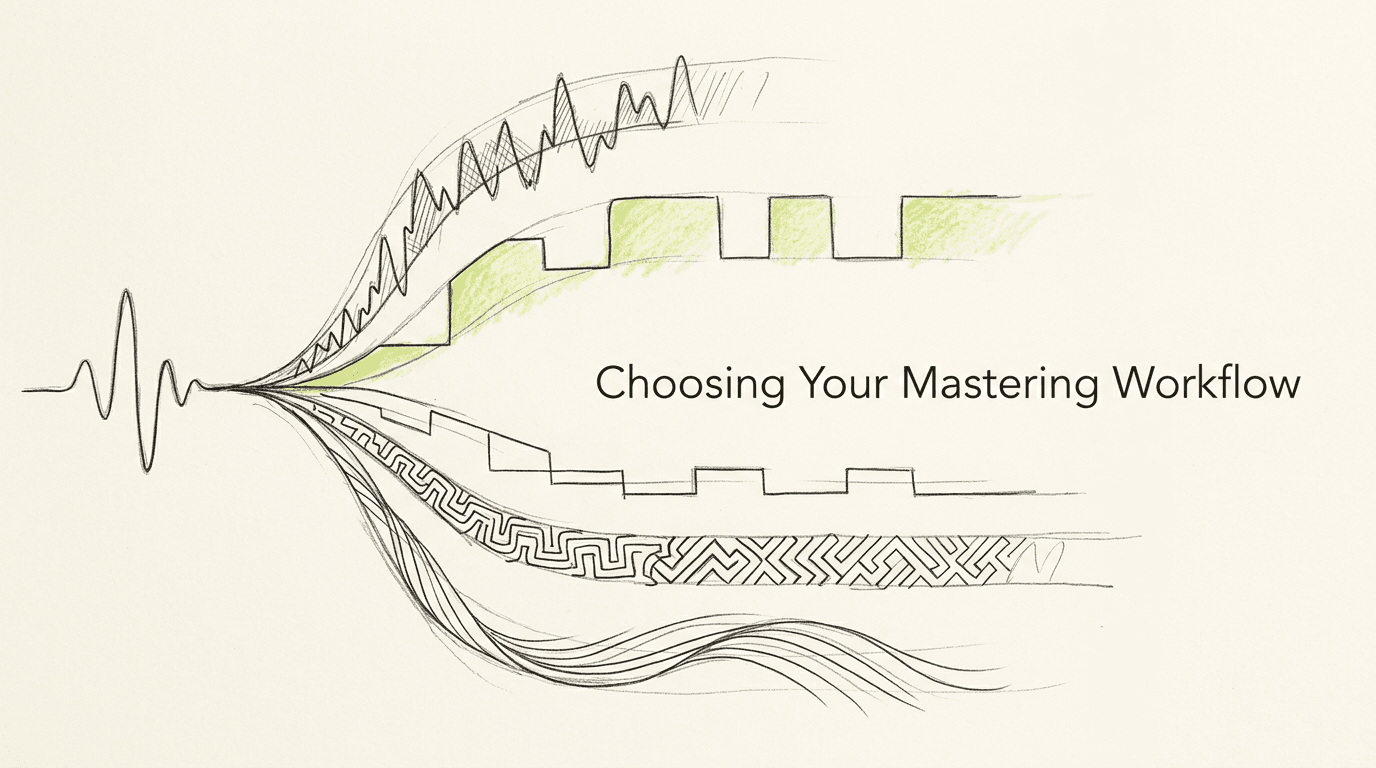
The moment the mix engineer prints the final bounce, the track exists in a dangerous middle ground: it sounds perfect on the studio monitors, but translating that impact to a car stereo, an earbud, or a club system requires an objective, specialized environment. Sending a track to a music mastering studio is not about making it louder; it is about transferring the responsibility of translation to a room specifically tuned to reveal flaws the mix room hid. Many independent artists assume that all mastering facilities operate exactly the same way, feeding audio through a standardized chain of limiters to hit a target loudness. In reality, the physical signal path a facility uses fundamentally changes how the final master reacts to heavy compression, how revisions are handled, and what formats the studio can actually deliver.
Quick Summary
A music mastering studio applies the final stage of equalization, compression, and limiting to a mixed track to ensure it translates consistently across all playback systems and meets commercial delivery standards. Choosing the right facility depends heavily on the studio's workflow and signal path.
- Fully Analog Mastering Facilities rely entirely on physical hardware, adding harmonic richness but making recalls slow and expensive.
- Hybrid Analog-Digital Studios combine analog outboard gear with digital precision, offering a balance of sonic warmth and revision flexibility.
- In-the-Box Digital Studios use software processing exclusively, allowing instant recalls and microscopic surgical corrections.
- Algorithmic Platforms apply automated processing based on target curves, sacrificing human judgment for immediate, low-cost turnaround.
Table of Contents
- Buying Guide: Choosing by Workflow and Signal Path
- 1. Fully Analog Mastering Facility
- 2. Hybrid Analog-Digital Studio
- 3. In-the-Box (ITB) Digital Studio
- 4. Dedicated Vinyl Cutting House
- 5. Algorithmic Mastering Platform
- Mapping Your Project to the Right Studio
- FAQ
- Recommended Reads
| Studio Type | Workflow and Signal Path | Features | Pros | Cons | Target Audience |
|---|---|---|---|---|---|
| Fully Analog Mastering Facility | Fully Analog | Outboard EQ, physical tape, analog limiting | Deep harmonic saturation, unique physical footprint, natural clipping | Expensive revisions, slow workflow, high session costs | Purist audiophile labels, artists recording to tape |
| Hybrid Analog-Digital Studio | Hybrid | Analog outboard gear, digital brickwall limiting, high-end AD/DA | Best of both domains, precise surgical EQ, rich analog tone | Requires elite converters, higher barrier to entry than ITB | Independent artists, commercial pop/rock/hip-hop labels |
| In-the-Box (ITB) Digital Studio | Digital | Plugin-based processing, digital limiting, software clipping | Instant total recall, precise linear phase EQ, rapid turnarounds | Can sound clinical, relies entirely on plugin algorithms | Electronic music producers, artists requiring frequent tweaks |
| Algorithmic Mastering Platform | Automated | Machine learning curves, automated loudness matching | Instant delivery, exceptionally low cost, zero human interaction | Ignores emotional context, applies generic curves, rigid | Hobbyists, podcasters, demo submissions |
Buying Guide: Choosing by Workflow and Signal Path
The commercial mastering market is heavily fragmented, but the criteria that actually separate these options is the Workflow and Signal Path. Rather than counting how many equalizers a studio owns, evaluate where the audio actually travels. This axis dictates the studio's pricing model, its turnaround time, and how easily you can request a vocal bump after the master is printed.
We categorize facilities along this axis into five distinct types:
- Fully Analog Mastering Facility: Audio is kept entirely in the analog domain, passing through physical circuits and often laying back to tape.
- Hybrid Analog-Digital Studio: Audio is processed through digital software for surgical cuts, routed out to analog hardware for tone and saturation, and captured back into the digital domain for final limiting.
- In-the-Box (ITB) Digital Studio: The entire signal path remains inside the computer, utilizing complex algorithms and linear-phase digital processing.
- Dedicated Vinyl Cutting House: A specialized facility where the signal path is built entirely around driving a cutting lathe to physically etch a master lacquer.
- Algorithmic Mastering Platform: An automated server that analyzes a file and applies a predetermined equalization and limiting curve without a human engineer.
Understanding which category a studio occupies prevents a label from booking an inflexible analog room when they know the artist will demand five rounds of microscopic revision.
1. Fully Analog Mastering Facility
When an acoustic jazz ensemble or a purist rock band refuses to let their recordings touch a digital processor, they seek out a Fully Analog Mastering Facility. This category routes the mix directly from an analog playback source - often a 1/2-inch tape machine - through a console of physical outboard equalizers and compressors, capturing the final print without relying on digital lookahead limiters.

The mechanism here relies on the physical properties of electricity passing through tubes, transformers, and discrete op-amps. Instead of a software plugin calculating a mathematical representation of a volume change, real voltage is manipulated. When a mix requires more perceived loudness in this environment, the engineer often drives the analog components slightly into the red, utilizing the natural clipping and harmonic saturation of the hardware rather than a digital brickwall. This physical headroom creates a dense, glued sound that plugins still struggle to perfectly emulate.
Hardware constraints dictate the revision schedule
Booking a fully analog room means committing to a rigid operational flow. Because the processing relies on the physical positions of knobs and switches, recalling a session to turn the bass down by a fraction of a decibel requires the engineer to manually reset every piece of equipment to its exact prior state.
The honest limit of this approach is its fundamental incompatibility with modern, iterative release schedules. If a mix engineer suddenly realizes they left a click track buried in the bridge and submits a new file three days later, the mastering engineer must rebuild the entire physical chain, often resulting in a steep recall fee. Artists who view mastering as a collaborative, back-and-forth process should skip this category entirely.
We would hesitate to route an electronic dance music project through a strictly analog path, as the genre often demands the transparent, ultra-fast transient control that only digital lookahead limiting can provide.
Pros
- Imparts authentic harmonic density and spatial depth.
- Provides a distinct, un-replicable sonic footprint.
- Natural clipping handles transient peaks musically.
Cons
- Revisions require expensive, manual hardware recalls.
- Lacks the surgical precision of digital linear-phase EQ.
- Slower turnaround times due to real-time printing.
2. Hybrid Analog-Digital Studio
Bridging the gap between vintage warmth and modern loudness standards, the Hybrid Analog-Digital Studio represents the current industry standard for commercial pop, hip-hop, and rock. In this environment, an engineer uses software to transparently remove problematic resonant frequencies before feeding the signal out of the computer, through high-end analog hardware for character, and back into the computer for final digital limiting.
The critical mechanism in a hybrid setup is the D-to-A and A-to-D conversion loop. The studio uses elite mastering-grade converters to translate the digital file into analog voltage, send it through physical mastering equalizers and compressors, and immediately recapture it. Once the audio is back in the digital realm, the engineer applies a digital brickwall limiter. This allows the master to achieve the extreme loudness required by modern streaming platforms without sacrificing the weight and physical saturation of the analog gear. It is the workflow that allows professional audio mastering to remain both competitive and musical.
Conversion transparency separates professional setups from project rooms
Running audio out of a computer and back in inherently degrades the signal if the conversion is not pristine. A hybrid studio lives and dies by the quality of its converters and its master clock.
Practical rule: If a facility advertises a hybrid workflow but does not list dedicated, mastering-grade digital-to-analog converters on their equipment roster, they are likely degrading your mix's stereo imaging by routing it through consumer-grade interfaces.
High operational costs represent the primary barrier for this setup, with those expenses inevitably passed down to the client. Maintaining an elite analog signal chain alongside top-tier digital converters requires immense capital, making these studios more expensive than a laptop-based engineer. Producers working with zero budget who simply need their tracks louder for a weekend DJ gig will find this level of infrastructure overkill.
We generally recommend this workflow when an artist requires the track to sound expensive and competitive on Spotify, but still wants the glue and three-dimensionality that physical hardware provides.
Pros
- Combines analog harmonic richness with digital loudness.
- Allows surgical pre-processing before hardware coloration.
- Digital limiting stage ensures strict compliance with streaming targets.
Cons
- Higher cost per song due to expensive infrastructure.
- Hardware stages still slow down the recall process.
- Poor conversion can ruin the benefits of the analog gear.
3. In-the-Box (ITB) Digital Studio
Driven by electronic music producers and fast-turnaround indie labels, the In-the-Box (ITB) Digital Studio executes every stage of the mastering process using software plugins. There is no physical outboard gear involved; the room relies entirely on highly accurate monitoring and the engineer's ability to manipulate algorithms.
Forget voltage passing through copper wire. Here, everything relies on 64-bit floating-point mathematics. When the engineer applies a low-shelf EQ, a software algorithm calculates the phase and amplitude adjustments across the frequency spectrum. This digital environment enables tools that are physically impossible in the analog world. Examples include linear-phase equalizers that adjust frequency balance without introducing phase smearing, or dynamic EQs that only suppress a harsh high-hat when it crosses a specific decibel threshold.
Total recall enables microscopic surgical corrections
Because every parameter is saved inside a session file, an ITB studio can recall a master instantly. If a client requests a 0.2dB reduction in the mid-range, the engineer opens the file, types in the value, and bounces the revision in three minutes.
Imparting physical weight to thin mixes is difficult. Digital saturation plugins have improved drastically. However, pushing a digital limiter hard often results in a brittle, fatiguing harshness rather than the musical distortion provided by an analog transformer. An ITB studio will disappoint some clients. This is especially true if they submit a sterile, entirely computer-generated beat and expect the mastering engineer to magically inject vintage soul and depth into it.
Choose an ITB facility when working on highly technical electronic music where maintaining razor-sharp transient detail is more important than analog color.
Pros
- Instant, highly accurate session recalls.
- Access to impossible-in-analog linear phase processing.
- Rapid turnaround times for iterative revisions.
Cons
- Can sound clinical or harsh when pushed for loudness.
- Lacks the natural harmonic glue of physical hardware.
- Plugin saturation often sounds two-dimensional.
4. Dedicated Vinyl Cutting House
A Dedicated Vinyl Cutting House does not produce files for Spotify or Apple Music; it exists solely to translate audio into physical grooves on a master lacquer. This is a highly specialized manufacturing step where the mastering engineer operates a mechanical lathe, dictating how a diamond stylus carves the music into a physical disc.

The mechanism of vinyl mastering is physical geometry. Low frequencies require wider grooves, while high frequencies require faster lateral stylus movements. If a mix features heavy sub-bass panned to the left side, the resulting groove will be so erratic that a consumer turntable needle will physically jump out of the track. The cutting engineer must sum the low frequencies to mono, apply the RIAA equalization curve (which drastically reduces bass and boosts treble before cutting), and carefully manage the physical spacing between the grooves to ensure the record plays back without skipping.
Physical lathe limitations override artistic loudness demands
The laws of physics govern this room, not the artist's ego. You cannot cut a -6 LUFS hyper-compressed master to vinyl without destroying the cutting head or creating an unplayable record.
These facilities focus on one medium. They will not provide a competitive digital streaming master. The physical requirements of vinyl cutting actively contradict the high-volume needs of smartphones. Artists attempting to use a vinyl master digitally face severe issues. Their tracks will sound quiet, bass-light, and dull compared to modern commercial releases.
We advise booking this specialized service only after your digital masters are completed, treating the vinyl cut as a separate, dedicated manufacturing expense.
Pros
- Ensures the audio translates safely to a physical groove.
- Prevents costly test-pressing rejections at the pressing plant.
- Engineers possess highly specialized mechanical knowledge.
Cons
- Useless for digital streaming or CD releases.
- Strict physical limits on loudness and stereo bass.
- Highly expensive, niche service.
5. Algorithmic Mastering Platform
For podcasters, hobbyists, and artists needing a quick demo polished at 2:00 AM, the Algorithmic Mastering Platform removes the human engineer entirely. These cloud-based services require the user to upload a mix, select a genre or reference track, and wait a few minutes for a processed file to return.
The mechanism relies on machine learning and spectral matching. The platform's algorithm analyzes the frequency distribution and dynamic range of the uploaded file, comparing it to a vast database of commercial tracks within the selected genre. It then automatically applies a static equalization curve to force the uploaded mix to match the target profile, followed by an automated limiter to bring the file up to a standardized loudness target. There is no listening involved; it is a purely mathematical comparison of frequency plots.
Machine learning targets the mathematical average, not the emotional core
An algorithm cannot tell if a vocal is meant to sound distant and haunting or if it is simply buried in the mix by mistake. It only knows that the mid-range energy is mathematically lower than the genre average, and it will blindly boost it.
Practical rule: Never use an automated platform to master a track that relies on intentional, unconventional mix decisions, as the algorithm will interpret your artistic choices as errors and attempt to "correct" them.
Complete rigidity defines the automated mastering workflow. If the automated master comes back with the snare drum sounding too harsh, you cannot ask the algorithm to apply a dynamic EQ cut at 4kHz; you can only select a different generic preset and hope for a better result. Serious recording artists preparing a commercial release should avoid this category, as it guarantees a generic, homogenized sound that ignores the emotional context of the song.
We would only utilize this option for quick volume-matching of rough demos before sending them to a vocalist for writing purposes.
Pros
- Instantaneous turnaround time.
- Fraction of the cost of a human engineer.
- Provides a quick, loud reference for demo purposes.
Cons
- Cannot interpret artistic intent or emotional context.
- Zero capacity for specific, targeted revisions.
- Often applies heavy-handed, generic EQ curves.
Mapping Your Project to the Right Studio
Selecting the correct facility requires matching your project's technical demands to the studio's Workflow and Signal Path.
If your project demands the absolute highest level of commercial competitiveness while retaining analog warmth, the Hybrid Analog-Digital Studio is the necessary choice. This workflow provides the surgical precision required to clean up modern mixes while utilizing physical hardware to impart the depth that major labels expect.
If your bottleneck is a rigid, purist aesthetic where digital processing is viewed as a compromise, route the project to a Fully Analog Mastering Facility. You must, however, be prepared to accept slower turnaround times and higher costs for any revisions.
If your situation involves highly complex electronic music requiring microscopic tweaks, or if you anticipate needing multiple rapid revisions to satisfy a demanding client, the In-the-Box (ITB) Digital Studio offers the total recall and speed necessary to keep the project moving.
If you are pressing physical records, you must utilize a Dedicated Vinyl Cutting House. Do not attempt to send a hyper-compressed digital master to a pressing plant without having a specialized engineer cut the lacquer first.
If you are simply trying to make a rough demo loud enough to listen to in the car on the way home from a session, an Algorithmic Mastering Platform provides an immediate, low-cost solution, provided you do not mistake it for a commercial release.
FAQ
What makes a sound mastering studio different from a mixing studio?
A mixing studio focuses on balancing individual multi-track stems (drums, vocals, guitars) into a single stereo file. A sound mastering studio takes that single stereo file and focuses entirely on the macro-level frequency balance and commercial loudness, using specialized acoustic treatment to ensure the track translates to consumer speakers.
Do audio mastering studios require the multi-track files?
No. Standard mastering requires only the final stereo mixdown (usually a high-resolution WAV file). If a facility asks for grouped stems (e.g., all drums on one track, vocals on another), they are performing "stem mastering," which bridges the gap between mixing and mastering.
Why do analog mastering facilities charge more for revisions?
Because they do not have instant software recall. The engineer must manually physically reset every knob and switch on their outboard gear to match the exact settings from the original session before they can make the requested adjustment.