7 Types of Studio Facilities When Seeking Audio Engineers for Hire
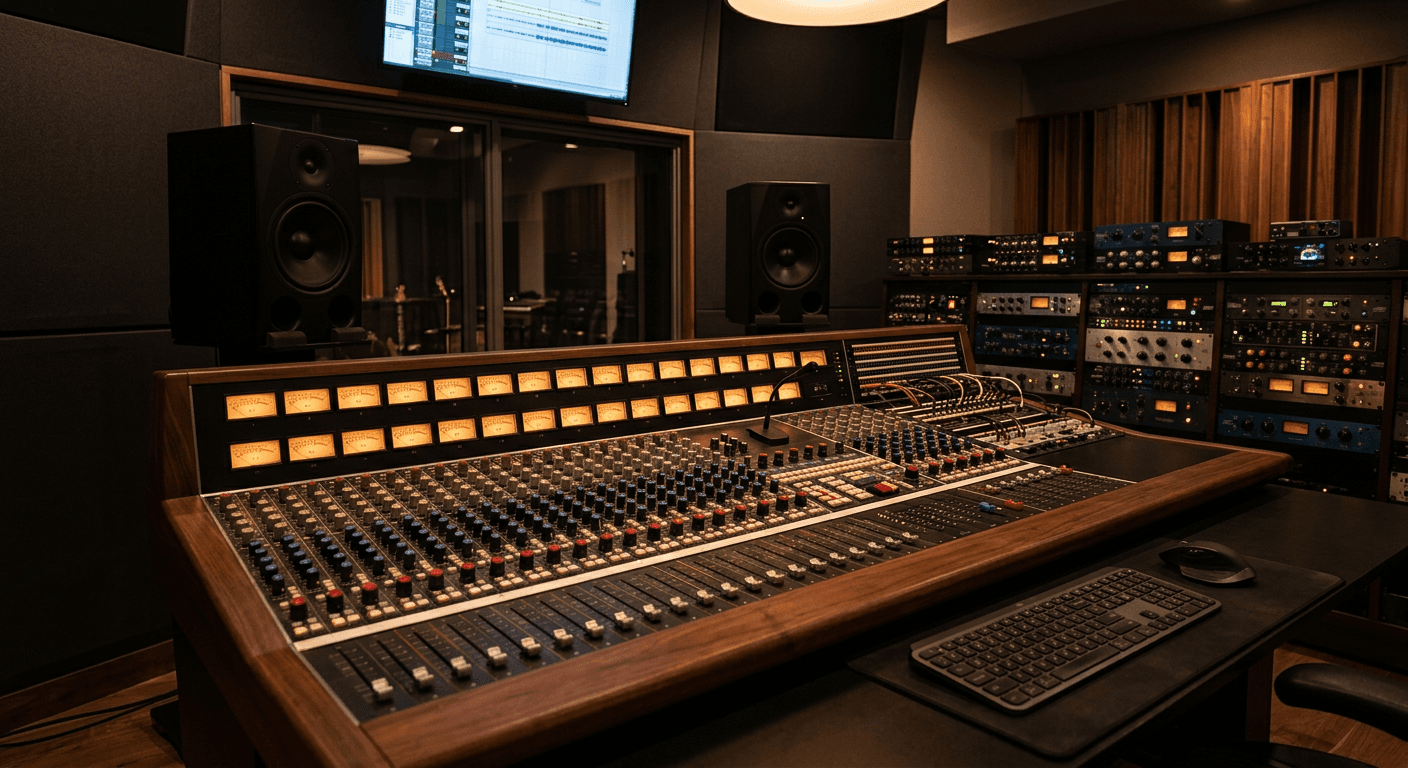
A common misconception among independent artists is that a professional recording studio operates as a single, monolithic entity where every phase of a record happens in the exact same room. In reality, locking out a massive live tracking room to edit vocals for two weeks is a fast way to burn through a production budget while compromising the final product. Finding the right space and the specialized audio engineers for hire who operate them requires matching the facility's acoustic design directly to your specific production phase. A room built to capture the explosive transient energy of a live drum kit is entirely different from a highly damped control room designed for surgical frequency equalization.
Quick Summary
Professional studio facilities are highly specialized acoustic environments designed for distinct phases of audio production, ranging from live multitrack recording to final analog finishing. Choosing the wrong facility type drastically inflates budgets and introduces acoustic limitations that cannot be fixed later.
- Match the acoustic volume of the room to the physical instrument you are recording.
- Decouple your tracking schedule from your mix schedule to optimize daily rates.
- Dedicated mastering houses require vastly different monitoring than tracking rooms.
- Mobile and specialized electronic suites serve niche workflows that standard studios handle poorly.
Table of Contents
- How to Evaluate a Studio's Core Purpose
- 1. Large-Format Tracking Rooms
- 2. Dedicated Vocal and Overdub Booths
- 3. Hybrid Mix Rooms
- 4. Specialized Mastering Houses
- 5. Post-Production Dub Stages
- 6. Electronic Production Suites
- 7. Mobile Recording Rigs
- Which Studio Facility Fits Your Current Bottleneck
How to Evaluate a Studio's Core Purpose
Before booking a facility, you must judge it by two primary criteria: its physical acoustic volume and its monitoring accuracy. A facility excels in one area by sacrificing the other. Large acoustic spaces are designed to manage low-frequency energy and reflections from live instruments, making them highly desirable for capturing raw performances. Conversely, tightly controlled, heavily trapped spaces prioritize monitoring accuracy, making them strictly suited for mixing and post-production. You evaluate a facility based on whether your immediate bottleneck is getting sound into a microphone or organizing the sound that is already there.
| Facility Category | Primary Mechanism | Best Production Phase |
|---|---|---|
| Tracking Room | Large acoustic volume, live sound capture | Drums, orchestras, full bands |
| Overdub Booth | Complete isolation, dead acoustics | Lead vocals, voiceover, solo horns |
| Mix Room | Nearfield accuracy, console balancing | Multitrack mixing, stem routing |
| Mastering House | Full-range precision, analog polishing | Final release formatting |
1. Large-Format Tracking Rooms
Large-format tracking rooms are massive acoustic spaces designed specifically to record live, loud, and complex sound sources. These spaces serve rock bands recording live off the floor, orchestral ensembles, and producers tracking acoustic drum kits.
The defining mechanism of a tracking room is its high ceilings and calculated cubic volume. They allow low-frequency sound waves to develop fully. This prevents destructive standing waves near the microphones. These spaces feature strictly non-parallel walls. Geometric diffusers line them to scatter sound energy, creating a pleasing natural reverberation rather than a harsh echo. Attached control rooms house large-format analog consoles. These handle 48 to 72 simultaneous microphone inputs, routing them instantly through complex patch bays to digital converters or tape machines.
Unmatched acoustic capture, inefficient for extended editing
The acoustic scale that makes these rooms incredible for recording a live rhythm section is entirely wasted on tasks that only require a single computer and a pair of monitors. Booking a 2,500-square-foot live room to tune vocals or program synthesizers is a severe misallocation of budget. When touring a tracking room, check the ceiling height and clap your hands forcefully: you should hear a smooth decay, not a rapid ringing flutter echo. If you hear ringing, the room will imprint that exact frequency onto your drum overhead microphones.
Practical rule: Never use your tracking budget to pay for editing time. Record the raw multitracks in a large room, take the hard drive, and do the tedious editing at a smaller, cheaper facility.
2. Dedicated Vocal and Overdub Booths
An overdub booth is a tightly enclosed, heavily treated space built strictly to isolate a single sound source from outside noise. This is the primary environment for tracking lead vocals, voiceovers, ADR (automated dialogue replacement) for film, or solitary string and brass overdubs.
Unlike large tracking rooms, these booths utilize massive amounts of high-density fiberglass and mineral wool absorption to create an acoustically "dead" environment. The mechanism here is the elimination of early reflections - the sound bouncing off walls and arriving at the microphone fractions of a millisecond after the direct sound. By removing these reflections, the microphone captures only the pure, direct voice. The signal is then typically routed through a highly curated, premium vocal chain, often a vintage tube microphone paired with a boutique preamp and optical compressor.
Perfect isolation, terrible for group energy
The complete lack of acoustic feedback in an overdub booth makes it intensely claustrophobic for musicians relying on room tone to shape their instrument's sound. A drum kit placed in a vocal booth sounds choked and lifeless because the cymbals have no physical space to decay. Before booking, check the booth's ventilation systems; poorly designed HVAC in small booths often introduces a low-frequency rumble that ruins quiet, intimate vocal takes.
3. Hybrid Mix Rooms
A hybrid mix room is designed for the critical balancing of audio that has already been recorded. It caters directly to mixing engineers and producers finalizing multitrack sessions. The facility merges analog hardware processors with digital workstation flexibility.
The acoustic design of a mix room focuses entirely on the "sweet spot" between the primary studio monitors. Instead of large, live spaces, the room utilizes tuned bass traps in the corners and broadband absorbers on the side walls to ensure the engineer hears the audio coming from the speakers, not the sound of the room itself. The mechanism relies on nearfield monitors placed on decoupled stands, preventing low-frequency vibrations from resonating through the studio furniture. When mix sessions become exceptionally dense, producers often route subgroups of instruments out of the computer and into specialized hardware for stem mastering services, providing crucial analog summing before the final track is bounced.
Highly accurate translation, lacking live recording space
Mix rooms rarely have isolated live tracking spaces attached to them. Attempting to record acoustic instruments in a control room full of humming gear, computer fans, and hard drives will result in unusable background noise bleeding into the microphones. If you are hiring a mix engineer in a dedicated mix room, request to know which specific studio monitor models they use, as the neutrality of those speakers dictates how well your song will translate to consumer headphones.
4. Specialized Mastering Houses
A mastering house is the final quality control checkpoint in the record production process. It exists to take a finished stereo mix, optimize its dynamic range, balance its frequency spectrum, and prepare it for commercial distribution across streaming platforms or physical media.
Mastering rooms operate on the principle of absolute, hyper-accurate playback. The physical room geometry is painstakingly calculated, often floating entirely on neoprene pucks to decouple it from the building's foundation. The audio passes through extremely expensive, specialized mastering equipment built with stepped attenuators instead of continuous knobs, allowing the engineer to recall left and right channel settings to a fraction of a decibel. This analog outboard gear applies delicate, musical coloration and precise limiting that digital plugins struggle to replicate natively.
Surgical final polishing, unable to fix fundamental mix flaws
A mastering house operates on a single stereo file. It can only affect the entire track at once. If the snare drum is too loud while the vocal is too quiet, a mastering engineer cannot independently turn the vocal up without pulling up the frequencies around it. Pressing physical records requires additional steps. The facility must apply specific low-frequency centering and treble control for dedicated vinyl mastering services. This ensures the physical needle does not skip out of the groove on playback.
5. Post-Production Dub Stages
A post-production dub stage is an expansive mixing theater built to replicate the acoustic experience of a commercial cinema. These facilities serve film directors, video game sound designers, and television post-production supervisors.
The core mechanism of a dub stage is object-based spatial audio routing, such as Dolby Atmos. Audio engineers here route hundreds of tracks of dialogue, Foley (custom recorded sound effects), and orchestral scores into a three-dimensional mixing environment. The room features massive projection screens acoustically perforated to allow sound from the center channel speakers hidden behind them to pass through unhindered. They rely heavily on network protocols like Dante to manage massive track counts with near-zero latency across multiple synchronized computers.
Spatial mixing power, overkill for stereo music
Booking a post-production dub stage for a standard stereo hip-hop or indie rock project is a drastic misallocation of resources. The immense cost of the facility covers video sync licensing, surround sound monitoring arrays, and massive mixing consoles designed for multi-operator workflows. Unless your label mandates a spatial audio release, avoid these facilities for standard music production. If you must use one, verify their exact playback certification standards to ensure compatibility with major streaming delivery requirements.
Practical rule: Only pay for spatial audio facilities if your distribution contract explicitly demands an Atmos or surround deliverable. Otherwise, stick to dedicated stereo mix rooms.
6. Electronic Production Suites
Electronic production suites are specialized control rooms designed around MIDI (Musical Instrument Digital Interface) communication, synthesis, and digital sequencing. They cater strictly to EDM producers, hip-hop beatmakers, and film composers working primarily "in the box."
Rather than massive microphone lockers, the mechanism of an electronic suite is the seamless integration of analog hardware synthesizers and drum machines into a digital audio workstation. These rooms feature complex MIDI patch bays, high-end digital-to-analog converters, and master word clocks that ensure all digital equipment samples audio at the exact same microsecond. The workflow allows producers to sequence melodies on a computer, trigger vintage analog synthesizers across the room, and record the audio back into the session simultaneously without timing latency.
Massive tonal flexibility, poor acoustic capture capability
These suites are fundamentally writing and composition rooms, not recording environments. Because all the sound generation happens via direct cables rather than microphones, the acoustic treatment is usually adequate for monitoring but entirely unsuitable for capturing live performances. When booking an electronic suite, review their specific mastering guides and tutorials to understand how you will need to prepare your dense MIDI sessions for final analog mixing, as raw synthesizer outputs require heavy dynamic control.
7. Mobile Recording Rigs
A mobile recording rig is not a physical building, but a highly sophisticated, transportable recording system designed to turn any space into a professional tracking room. These are utilized for capturing live concert albums, recording choirs in large stone churches, or tracking bands in remote residential cabins.
The mechanism relies on isolating the preamplification stage from the control stage. High-end analog preamps are mounted in rugged travel racks placed directly on the stage next to the musicians. The audio is immediately converted to digital data and sent over a single ethernet cable to an isolated truck or side room where the engineer monitors the feed. This eliminates the need for hundreds of feet of heavy copper snake cables, drastically reducing signal degradation and electrical hum.
Environmental authenticity, completely uncontrolled acoustics
The defining feature of a mobile rig is also its greatest liability: you are entirely at the mercy of the environment. Unlike a commercial tracking room, a church or a live venue has zero acoustic isolation from the outside world. An ambulance driving by or an HVAC unit turning on during a quiet acoustic guitar intro will be permanently printed onto the recording. If considering a mobile rig, you must physically inspect the location's electrical grounding to ensure your specialized mastering and mixing services down the line are not spending hours removing 60Hz electrical buzz from the multitracks.
Which Studio Facility Fits Your Current Bottleneck
Selecting the right facility dictates the technical success of the project. If your bottleneck is raw acoustic energy - a drum kit that needs space to breathe or a brass section that requires natural reverberation - book a large-format tracking room for the exact number of days you need to capture those performances, and not a day longer. If your bottleneck is isolation, an overdub booth provides the dead acoustic canvas necessary for pristine lead vocals.
Conversely, if the raw tracking is finished and your bottleneck is translation - meaning your song sounds great in your car but terrible on a phone - you require the precise monitoring of a hybrid mix room or a dedicated mastering house. Skip the post-production dub stages and electronic suites unless your specific deliverables demand spatial audio or complex hardware synthesizer routing. Aligning the acoustic environment strictly to the task at hand ensures maximum efficiency and professional audio fidelity.
FAQ
Can a mixing engineer work in a tracking room? Yes, but it is highly inefficient. Tracking rooms are designed for recording live sound, and their acoustics are less controlled than dedicated mix rooms. Furthermore, their high daily rates make them far too expensive for the lengthy process of mixing a record.
Why do vocal booths sound "dead"? Vocal booths are heavily treated with dense acoustic absorption materials to completely eliminate sound reflections. This ensures the microphone captures only the direct sound of the voice without any room echo, making the vocal easier to manipulate later.
What makes a mastering house different from a mix room? A mix room is built to balance multiple separate tracks into one stereo file. A mastering house focuses entirely on that final stereo file, using highly precise, stepped analog equipment and surgically accurate monitors to prepare the track for commercial release.
Do I need a post-production dub stage for my album? No, unless you have a specific contractual requirement to deliver the album in a spatial audio format like Dolby Atmos. For standard stereo music releases, a traditional mix room is the correct and far more cost-effective choice.