How to Choose a Music Mastering Studio: 5 Approaches Compared
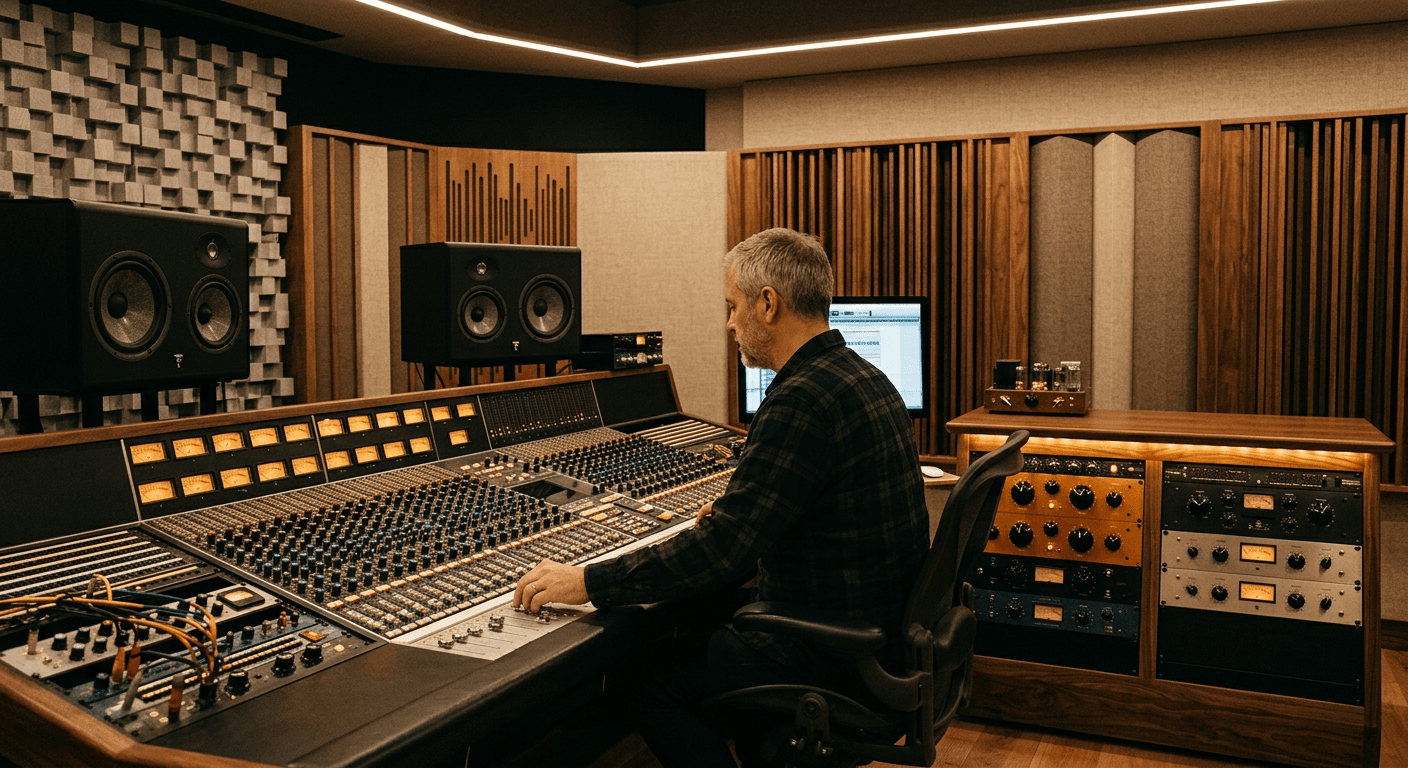
The mix is finally locked, the stems are printed, and the harsh reality of playback sets in: the track sounds massive on the monitors but collapses into a thin, unglued mess in a standard car stereo. Fixing that discrepancy without destroying the mixing engineer's dynamic intent is exactly why independent artists book a dedicated music mastering studio. It is the final quality control stage before distribution, introducing the vital equalization, limiting, and sequencing required to meet strict industry playback standards. Relying solely on a mix bus compressor rarely translates outside the mixing room.
Quick Summary
A professional facility standardizes finished mixes for commercial distribution, ensuring playback consistency across consumer devices, streaming algorithms, and physical media. Selecting the right operation means aligning the studio's workflow with your track's specific frequency and spatial requirements before finalizing the release.
- Processing choices dictate the final balance between harmonic coloration and clinical precision.
- Physical media formats demand distinct technical specifications that standard digital workflows routinely miss.
- Stem separation requires environments equipped to handle multi-bus routing prior to the final limiting stage.
Table of Contents
- Buying Guide / How to Choose
- 1. Hybrid Analog Facilities
- 2. In-the-Box Digital Studios
- 3. Algorithmic Processing Platforms
- 4. Specialized Physical Media Houses
- 5. Stem-Focused Engineering Services
- The Track's Deficiencies Dictate the Facility Choice
- FAQ
- Recommended Reads
| Facility Type | Processing Workflow | Features | Pros | Cons | Target Audience |
|---|---|---|---|---|---|
| Hybrid Analog Facilities | Hybrid Analog Facilities | Physical outboard gear, custom A/D conversion, manual patching | Generates natural saturation, widens stereo image, glues frequencies | Slower recall times, physically restrictive | Independent musicians needing physical weight and warmth |
| In-the-Box Digital Studios | In-the-Box Digital Studios | 64-bit architecture, linear-phase EQ, total software recall | Mathematically transparent, perfect phase coherence, instant revisions | Lacks physical harmonic distortion, can sound sterile | Producers of clinically precise electronic music |
| Algorithmic Processing Platforms | Algorithmic Processing Platforms | Machine learning, automated limiting, cloud server rendering | Instant turnarounds, strict LUFS targeting, no hourly fees | Destroys artistic nuance, amplifies mix errors | Budget-restricted podcasters and quick demo testing |
| Specialized Physical Media Houses | Specialized Physical Media Houses | 150Hz mono fold-down, strict de-essing, side sequencing | Prevents stylus skipping, ensures safe geometry, limits distortion | Noticeably darker audio, unfit for streaming | Record labels manufacturing wax or cassettes |
| Stem-Focused Engineering Services | Stem-Focused Engineering Services | Grouped bus processing, multi-track dynamic isolation | Fixes severe masking, allows surgical drum limiting, saves bad mixes | Alters intended volume balances, higher project costs | Artists with fatal frequency collisions in their stereo mix |
Buying Guide / How to Choose
Many artists seek a Grammy-winning mastering engineer because they understand how to evaluate these drastically different environments. The critical lens separating audio mastering studios is their Processing Workflow. This axis defines exactly how the audio is treated, routed, and finalized.
We categorize these workflows into five distinct models. Hybrid Analog Facilities route digital files through physical electrical hardware to generate warmth. In-the-Box Digital Studios keep audio entirely locked within 64-bit software architecture for absolute transparency. Algorithmic Processing Platforms remove the human element entirely, relying on code to force audio into statistical loudness averages. Specialized Physical Media Houses focus strictly on the geometric constraints of wax and tape rather than digital algorithms. Finally, Stem-Focused Engineering Services bypass standard stereo limitations by operating on grouped instrument tracks to fix severe mix imbalances.
1. Hybrid Analog Facilities
Why does the snare drum still lack physical punch? Despite weeks of software equalization, the digital mix fails to anchor the record. Pushing that digital file through a sound mastering studio equipped with outboard gear solves this translation issue. It bridges digital precision and physical saturation. Operating as an online mastering studio worldwide allows hybrid facilities to process files for international clients while utilizing localized physical hardware. Filling the Hybrid Analog Facilities category of our Processing Workflow axis, this setup routes the digital mix out of the computer. It then passes through specialized iron and copper components.
The mechanism relies on dedicated digital-to-analog converters that translate binary code back into electrical voltage. This voltage flows through vacuum tube equalizers and discrete solid-state compressors. As the electricity pushes against the physical components, it generates subtle harmonic distortion and clips the highest transients naturally. This physical resistance glues the disparate frequency bands together, providing a density that mathematical plugins struggle to replicate. The saturated signal is then recaptured through analog-to-digital converters, allowing the engineer to apply a final digital brickwall limiter to reach commercial loudness targets without destroying the dynamic range. The process often commands standard rates around $120/song, which typically includes necessary adjustments like 3 free revisions to fine-tune the outboard settings.
Outboard circuitry introduces physical harmonic distortion
The sheer weight introduced by high-end transformers actively alters the waveform rather than just equalizing it. Because the audio is physically passing through copper and tubes, the stereo image often widens organically. This environment excels at warming up harsh, sterile recordings produced entirely inside a laptop.
Practical rule: Evaluate a facility by its room acoustics and monitoring setup, not just its outboard gear list; a poorly treated room negates the benefit of premium equalizers.
Physical patch bays heavily restrict workflow speed. Because the signal path requires manual knob positioning and outboard cable routing across multiple racks, recalling an exact session to adjust a single decibel at 4kHz takes substantial time. Producers who demand instant, infinite tweaks quickly outrun the patience of this setup. We would hesitate to run highly clinical, ultra-clean electronic music through heavy iron transformers if the producer intentionally sought a sterile, razor-sharp aesthetic.
Secure this approach when the mix requires spatial depth and structural glue that standard software fails to emulate.
Pros
- Generates authentic harmonic distortion naturally
- Widens the stereo field through physical component variances
- Provides dynamic glue that tames harsh digital transients
Cons
- Session recall is slow and cumbersome
- Physical hardware limits instantaneous A/B testing
- Revisions often require running the audio back through real time
2. In-the-Box Digital Studios
Where outboard operations rely on electricity and vacuum tubes, a purely software-based environment keeps the audio locked inside the computer from start to finish. In-the-Box Digital Studios define the mathematical end of our Processing Workflow axis, serving producers who require absolute recall and clinical transparency. The facility imports the stereo track into a high-resolution digital audio workstation, processing the audio entirely through 64-bit software architecture. Studying client reviews and testimonials reveals that producers who value speed heavily favor these digital setups.
The mechanism relies on mathematical precision rather than physical resistance. Using linear-phase equalizers, the engineer can adjust a specific frequency band without introducing the subtle phase shifts or timing delays inherent to analog circuits. Multi-band compression algorithms isolate dynamic control to exact frequency ranges, clamping down on a harsh hi-hat without affecting the snare drum beneath it. Because the audio never leaves the digital domain, there is zero generational loss or noise floor introduced by cables and converters. The engineer can instantly A/B test a dozen different limiters in seconds, adjusting thresholds by fractions of a decibel.
Mathematical precision guarantees phase coherence
This environment allows for surgical correction that physical gear cannot execute. If a localized resonance exists strictly at 3.2kHz, a digital dynamic equalizer can surgically suppress that exact frequency only when it crosses a specific volume threshold, leaving the surrounding audio completely untouched.
What this environment struggles with is generating authentic, chaotic saturation. When a mix sounds inherently brittle or sterile, mathematically pure processing often just makes it louder and more aggressively brittle. Engineers trying to digitally emulate hardware drive frequently push the plugins into harsh digital clipping, resulting in a fatiguing, two-dimensional sound. We would hold off on this route if the original stems were entirely programmed soft-synths that desperately need the color and unpredictability of analog staging to sound alive.
Choose a purely software-based environment for heavily automated, clinically precise electronic tracks that demand absolute transparency and surgical correction.
Pros
- Enables absolute phase coherence via linear processing
- Allows instant session recall for rapid revisions
- Prevents added noise floors from physical cables
Cons
- Fails to generate authentic harmonic saturation
- Digital clipping sounds audibly harsher than tube distortion
- Can leave entirely digital mixes sounding sterile
3. Algorithmic Processing Platforms
Why do so many automated tracks sound identically loud but entirely lifeless? The answer lies in how code interprets audio. Algorithmic Processing Platforms represent the automated extreme of our Processing Workflow axis, replacing human judgment entirely with machine learning models.
The mechanism starts when a user uploads a mix to a remote server. The software analyzes the file's frequency balance, peak volume, and stereo width. It then cross-references these metrics against a massive database of commercially released tracks within a selected genre. Using pre-set mathematical thresholds, the algorithm automatically applies a chain of digital equalization, compression, and limiting to force the uploaded track into the statistical average of that genre. The entire operation executes in seconds without human monitoring.
Machine learning targets statistical averages over artistic intent
Because algorithms operate on established loudness metrics, they excel at rapidly maximizing volume. They guarantee a file will hit the standard -14 LUFS streaming target, preventing a track from sounding significantly quieter than a playlist neighbor.
The structural boundary of code is that it cannot interpret emotion, context, or artistic subversion. If a mix intentionally features a muffled, lo-fi vocal for a specific narrative effect, the algorithm will ruthlessly equalize it to match standard pop brightness, destroying the creative decision. Furthermore, algorithms cannot fix severe mix imbalances; they merely amplify them. If the sub-bass is slightly too loud, the automated limiter will choke the entire track every time the kick drum hits, resulting in severe, unmusical pumping. We would skip this entirely if the track relies on unconventional dynamics, purposeful distortion, or any aesthetic choice that intentionally deviates from Top 40 radio standards.
Utilize automated algorithms solely for quick demo testing, budget-restricted background audio, or podcast dialogue where creative nuance is secondary to raw loudness.
Pros
- Delivers instantaneous final files in seconds
- Ensures tracks hit standard streaming loudness targets
- Eliminates hourly engineering fees
Cons
- Destroys intentional artistic imbalances
- Causes aggressive pumping if the mix has too much bass
- Cannot provide feedback on pre-existing mix errors
4. Specialized Physical Media Houses
Sending a heavily limited streaming master directly to a pressing plant is the fastest way to ruin a physical record. Specialized Physical Media Houses exist strictly to prevent the mechanical limitations of legacy formats from destroying a release. They occupy the physical format category of our Processing Workflow axis, focusing heavily on geometry rather than just aggressive loudness.
The mechanism is governed by the physical reality of a cutting stylus. High-energy, out-of-phase low frequencies cause a physical cutting needle to jump completely out of the groove. To prevent this, the engineer employs specialized hardware to fold all frequencies below 150Hz into strict mono. The facility applies aggressive high-frequency de-essing to prevent harsh sibilance from physically distorting during inner-groove playback, where the circumference is smaller and the cutting speed is slower. Furthermore, the engineer sequences the album side-by-side to ensure the loudest, most dynamic tracks sit on the outer edge of the disc. This specialized technical processing often carries a dedicated $50/project fee on top of standard facility rates.
Cutting mechanics dictate strict frequency boundaries
Preparing audio for physical grooves requires anticipating mechanical failure. A physical media specialist ensures the lacquer cut will not skip on consumer turntables while preserving as much dynamic impact as the RIAA equalization curve allows.
The operational constraint here is strict format rigidity. A physical pre-master sounds noticeably darker, quieter, and less wide than its streaming counterpart. Labels attempting to save money by using a physical media master for digital distribution will find their release noticeably weaker and less aggressive than playlist competitors. What would make us hesitate is booking this facility type for a purely digital release, as the required compromises actively harm performance on modern digital platforms.
Commission a physical media specialist exclusively when manufacturing actual records, cassettes, or dedicated CD runs that require strict adherence to mechanical playback limits.
Pros
- Prevents needles from skipping on physical turntables
- Eliminates inner-groove high-frequency distortion
- Optimizes track sequencing for physical side lengths
Cons
- Restricts extreme stereo width in the low end
- Results in a darker overall master than digital streams
- Requires separate fees on top of standard processing
5. Stem-Focused Engineering Services
A heavily clipped, poorly balanced stereo file leaves the facility with zero headroom to fix an overpowering vocal without simultaneously crushing the snare drum. Stem-Focused Engineering Services bypass this standard stereo bottleneck by processing grouped instrument busses individually. This approach defines the multi-track category of our Processing Workflow axis. Facilities providing comprehensive mastering and mixing services often recommend stem separation to salvage problematic audio.
Instead of a single printed mix, the client delivers 4 to 8 grouped stereo tracks - such as all drums, all vocals, all guitars, and all synths. The engineer processes these busses independently before summing them through the final limiting stage. This mechanism allows the application of severe transient compression to the drum bus to add punch, without causing the lead vocal to pump unnaturally. The studio effectively bridges the final stage of mixing and the first stage of finalizing, addressing severe frequency masking that a standard stereo equalizer could never isolate. Rates reflect the expanded workload, often starting around $100/song with an additional $10 per stem group.
Bus separation isolates dynamic processing
Handling audio in sub-groups provides unprecedented salvage capabilities for problematic mixes. If the bass guitar and the kick drum are constantly fighting for low-end dominance, the engineer can side-chain the bass stem to the kick stem, carving out localized space before the audio ever hits the master bus compressor.
Practical rule: When it is time to upload files for mastering, ensure your stems are printed without master bus limiters; doing so bakes in the exact dynamic problems the engineer is hired to fix.
The practical limit emerges in the liability of the mix balance. By opening the stems, the artist surrenders the exact relative volumes of their instruments. An inexperienced facility can easily ruin the intended arrangement by pushing the vocal stem far higher than the producer intended, essentially remixing the track against the artist's wishes. We would reject a stem project if the artist demands the exact dynamic relationships of their rough mix remain totally untouched, as the process inherently alters internal balances.
Send grouped busses when the mix contains fatal frequency collisions that standard stereo processing cannot surgically reach without collateral damage.
Pros
- Allows surgical repair of poorly balanced mixes
- Prevents heavy drum compression from crushing vocals
- Isolates low-end frequency masking perfectly
Cons
- Surrenders exact mix volume control to the engineer
- Increases project costs due to track counts
- Requires meticulous stem printing from the producer
The Track's Deficiencies Dictate the Facility Choice
When a mix sounds clinically perfect but lacks the physical weight necessary to compete on commercial radio, Hybrid Analog Facilities provide the essential harmonic distortion and stereo width that standard plugins cannot generate.
Producers dealing with mathematically precise electronic music that requires transparent, surgical corrections should secure In-the-Box Digital Studios to preserve phase coherence and utilize exact recall capabilities.
For budget-restricted projects or background audio where artistic nuance is secondary to hitting standard loudness targets quickly, Algorithmic Processing Platforms deliver instant, statistical averages.
Labels preparing a release for physical manufacturing must utilize Specialized Physical Media Houses to ensure the master file respects the strict geometric limits of cutting styluses and cassette tape saturation.
Finally, artists facing fatal frequency collisions that standard stereo processing cannot fix without collateral damage should supply grouped stems to Stem-Focused Engineering Services.
FAQ
What is the difference between mixing and mastering?
Mixing involves balancing individual instruments like drums, vocals, and guitars to create a cohesive stereo track. Mastering is the final step that takes that finished stereo mix and applies global equalization, compression, and limiting to ensure it meets commercial loudness standards and translates consistently across all playback systems.
How much does a professional session typically cost?
Rates vary based on the workflow, but standard professional sessions often start around $120 per song. Specialized services like physical media preparation can incur an additional $50 project fee, while processing separated stems usually begins at $100 per song plus extra fees for each additional group.
Why do vinyl records require a different processing approach than digital streams?
Physical grooves have strict mechanical limitations. Excessive low-frequency width or extreme treble can cause the physical cutting stylus to jump or distort. A specialized facility folds sub-bass frequencies into mono and applies aggressive de-essing to ensure the audio physically fits the geometry of the disc without skipping.