How to Select Mastering Studio Speakers for Critical Audio Translation
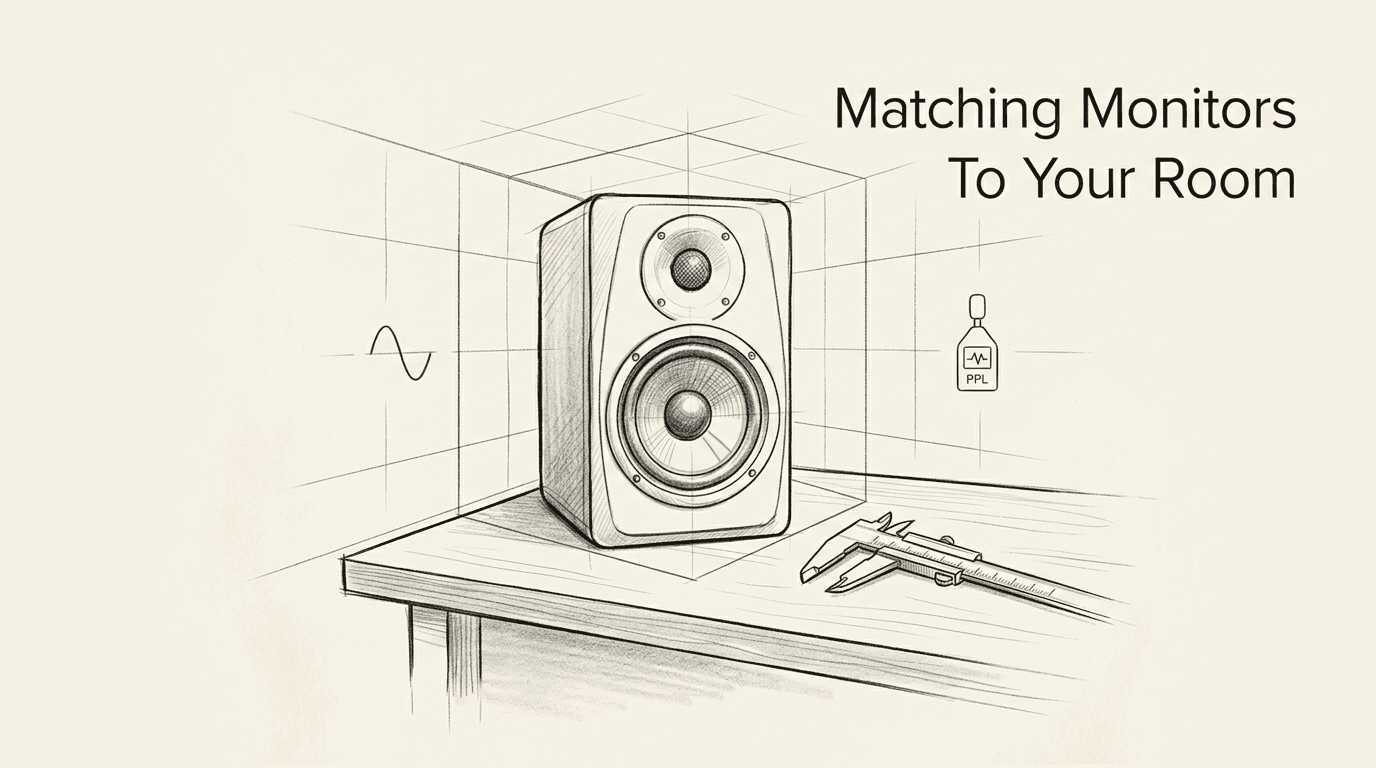
Most engineers upgrade their playback system under the assumption that a ruler-flat frequency response graph published by a manufacturer will guarantee objective decision-making. In reality, placing pristine audio mastering monitors into an untreated or mismatched acoustic environment simply amplifies the room's inherent flaws rather than revealing the mix's actual deficiencies. A monitor is merely a transducer; it cannot bypass the physical air volume it pressurizes. Selecting proper mastering studio speakers requires matching driver excursion limits, crossover topologies, and amplification styles to the physical constraints of the listening space. Doing so ensures that equalization and dynamic adjustments translate safely to consumer playback formats without introducing masking or phase distortion.
Quick Summary
Selecting mastering-grade monitoring systems is an architectural decision rather than just an equipment purchase. It involves matching speaker topologies, specifically crossover points, driver materials, and cabinet designs, to the acoustic limits of the control room. Proper monitor selection prevents phase smearing and low-frequency masking, allowing engineers to make objective dynamics and equalization decisions.
- Acoustic room volume dictates maximum driver size and low-frequency extension limits.
- Two-way crossover points placed in the critical vocal range introduce destructive phase shifts.
- Ported cabinet designs artificially extend bass but introduce temporal smearing on transient decays.
- Amplifier headroom is necessary to evaluate uncompressed percussion transients accurately.
Table of Contents
- 1. Assess the Room Before Specifying the Speaker
- 2. Match the Crossover Network to Your Workflow
- 3. Select the Amplification Architecture
- 4. Evaluate the Transient Response Characteristics
- 5. Calibrate the Setup for Target Sound Pressure
- Why New Mastering Monitors Fail to Translate
- FAQ
- Recommended Reads
1. Assess the Room Before Specifying the Speaker
Large, full-range transducers physically overwhelm small spaces. No equalizer can reverse these acoustic problems. A room's physical dimensions dictate its Schroeder frequency. Below this threshold, the room stops acting as a reflector. It behaves instead as a resonant cavity. Here, low-frequency sound waves fold back on themselves, creating standing waves. These standing waves result in massive peaks and severe nulls at specific listening positions.
Why acoustic volume dictates driver size
The most frequent mistake when selecting monitors for a commercial or residential space is purchasing a large, three-way system with a 10-inch or 12-inch woofer for a room measuring less than 15 feet in length. The driver pushes a 40Hz wave. This wave physically cannot develop before hitting the rear wall and reflecting back perfectly out of phase. This creates a destructive interference null directly at the listening position. The engineer hears a lack of sub-bass. They compensate by boosting the 40Hz region on their master equalizer. The resulting track plays back with overwhelming, distorted bass on consumer systems because the lack of low-end was a symptom of the room, not the mix. To achieve true translation during Professional Audio Mastering | LB-Mastering Studios, the monitor's low-frequency cutoff point must align with the physical space's ability to support those wavelengths. Engineers in smaller rooms are better served by nearfield monitors rolling off smoothly at 55Hz, supplemented by precise headphone checks, rather than forcing a large driver to excite uncontrollable room modes.
2. Match the Crossover Network to Your Workflow
Multiple drivers are necessary because no single cone can accurately reproduce both a 30Hz kick drum and a 15kHz cymbal. The crossover network divides the audio signal, sending low frequencies to the woofer and high frequencies to the tweeter. However, the physical point where these frequencies split introduces mechanical and electrical complications. Filtering is never a perfectly vertical cutoff; it is a slope where both drivers produce the exact same frequencies at a reduced volume.

Where phase shift damages spatial judgment
Passive crossovers utilizing physical inductors and capacitors introduce phase rotation at the crossover frequency. If a two-way monitor places its crossover point squarely at 2kHz, the woofer and tweeter are both reproducing the most critical fundamentals of the human voice simultaneously, slightly out of phase with one another. The mistake engineers make here is relying on these monitors to judge vocal sibilance and harshness. The phase smearing at the crossover point causes the vocal to sound smeared or distorted in the center image. An engineer might heavily compress or aggressively de-ess the vocal to fix the harshness they hear, only to discover the vocal sounds completely muffled on a well-aligned system. Using comprehensive Audio Mastering Services in North Carolina | LB-Mastering Studios requires equipment where crossover networks are pushed deliberately out of the critical 1.5kHz to 3kHz vocal range. Choosing a three-way monitor often places the mid-to-high crossover much higher, around 4kHz, keeping the crucial vocal fundamentals anchored cleanly in a single mid-range driver.
3. Select the Amplification Architecture
The motor structure of a speaker driver requires significant current to overcome physical inertia. The amplifier must deliver enough instantaneous power to move the voice coil outward for a transient and pull it back precisely before the next waveform begins. The speed at which an amplifier can deliver this voltage is known as its slew rate.
Passive routing versus active DSP correction
A critical failure point in monitor specification is underpowering passive speaker cabinets. Many facilities purchase high-end passive monitors but connect them to budget Class A/B amplifiers lacking sufficient headroom. When an uncompressed snare drum hits, the amplifier runs out of current reserves. It rounds off the leading edge of the waveform, physically clipping the signal before it reaches the speaker. The engineer perceives the snare as warm and adequately controlled, missing the fact that their mix is highly erratic. They skip applying necessary limiting, relying on the amplifier's failure as a false compressor. When handling separated audio buses during Stem Mastering Services | LB-Mastering Studios, evaluating true peak transients requires amplifiers with immense headroom, often exceeding 300 watts per channel even for moderate listening levels. Active monitors bypass this risk by providing dedicated amplifiers tailored exactly to the impedance and excursion limits of each specific driver, ensuring transients are never accidentally smoothed over by a starving power supply.
4. Evaluate the Transient Response Characteristics
Speaker cabinets handle the backward-traveling sound wave generated by the woofer in two primary ways: they either trap it completely inside a sealed box, or they invert its phase and push it out through a tuned port to increase bass output. Ported cabinets, also known as bass reflex designs, are the standard in modern monitoring because they provide an illusion of massive low-end from a relatively small footprint.
How cabinet tuning limits dynamic evaluation
The trade-off for port-generated bass is temporal smearing. The port creates a resonant bump that physically continues to ring after the amplifier has stopped sending the signal. This is known as group delay. The mistake occurs when an engineer relies on a ported monitor to judge the decay time of an 808 sub-bass or a deep kick drum. The monitor's port rings out, masking the actual tail of the instrument. The engineer cuts the sub-bass decay artificially short in the workstation, resulting in a master that sounds thin and lacking energy in club environments.
Practical rule: If the room is smaller than 1,500 cubic feet, prioritize sealed acoustic suspension monitors over ported designs to preserve transient accuracy and eliminate group delay in the low frequencies.
Sealed acoustic suspension monitors lack the extended low-frequency volume of a ported design, but their roll-off is gradual and their transient decay is incredibly fast and precise. This level of honesty is required to ensure dynamic stability, especially when preparing high-resolution formats through Vinyl Mastering Services | LB-Mastering Studios North Carolina, USA, where excessive out-of-phase bass resonance can physically cause a stylus to skip.
5. Calibrate the Setup for Target Sound Pressure
Human hearing does not possess a flat frequency response. According to the Fletcher-Munson curves, our ears are significantly less sensitive to very low bass and extreme treble at quiet volumes. As volume increases, our perception flattens out, making the bass and highs appear louder even though the physical output ratio remains identical.
Listening fatigue at non-linear volume levels
Failing to establish a fixed, calibrated listening level guarantees inconsistent equalization decisions. The common pitfall is the engineer who starts the morning monitoring at a quiet 70 dB SPL and aggressively boosts the low frequencies because the master sounds thin. By the afternoon, experiencing ear fatigue, they turn the monitors up to 90 dB SPL. At this elevated volume, the bass feels overwhelming, so they apply a high-pass filter, undoing their morning's work. The resulting master sounds disjointed because the target constantly moved. Taking a Studio Tour | Analog Mastering Facility | LB-Mastering Studios reveals that professional acoustic spaces operate at locked reference levels, typically calibrated to 83 dB SPL for cinematic work, or 76 to 79 dB SPL for nearfield music setups using pink noise and an SPL meter. Locking the monitor controller to this exact volume ensures that every EQ decision is made against a consistent psychological baseline, preventing fatigue-driven overcorrections.
Why New Mastering Monitors Fail to Translate
Upgrading to reference-grade transducers rarely solves translation issues on its own. When a new system fails to translate to the outside world, the monitor is almost never the broken component. The failures stem from geometry and room integration.
Overcompensating for boundary interference
Speaker boundary interference response (SBIR) dictates how a monitor interacts with the solid wall directly behind it. When a speaker is placed exactly one meter away from the front wall, the low frequencies wrap around the cabinet, hit the wall, and reflect back. The time it takes to travel that distance puts specific frequencies entirely out of phase with the forward-firing sound. This typically creates a massive null around 85Hz. The engineer attempts to equalize the missing bass into the track, but adding voltage to an acoustic null only burns amplifier headroom without increasing the volume in the room. The fix requires either pushing the monitors flush against the wall to push the interference frequency so high that acoustic panels can absorb it, or pulling them far enough into the middle of the room to lower the null beneath the speaker's operating range.
Relying entirely on digital room correction
Measurement microphones and DSP correction software are highly effective at smoothing out minor peaks in a room's response, but they are frequently abused to solve structural problems. Digital correction cannot fix acoustic nulls caused by destructive interference, and applying heavy DSP filters introduces severe phase shifts that smear the stereo image. The symptom of over-corrected DSP is a control room with an aggressively tiny sweet spot. Moving your head three inches to the left drastically changes the frequency response. Achieving predictable translation, particularly for Mastering for Streaming - Spotify, Apple Music, Tidal | LB-Mastering Studios, demands physical bass trapping and broadband absorption first. DSP should only be utilized to trim the final 2 or 3 decibels of modal ringing, never as a replacement for fiberglass traps.
Misjudging the sweet spot dimensions
Monitors must form an exact equilateral triangle with the listening position. The frequent mechanical failure is aiming the tweeters directly at the ears. Because high frequencies are entirely directional, aiming them at the ear canal means the focal point of the stereo field actually collapses in front of the engineer's face. The symptom is a hyper-wide stereo image where panning adjustments feel exaggerated, leading the engineer to mix everything far too narrow. The strict fix is angling the monitors so their acoustic axes intersect roughly 12 to 16 inches directly behind the engineer's head, allowing the dispersion pattern to naturally encompass the listening position and present an accurate phantom center.
FAQ
Can nearfield monitors be used for commercial mastering? Yes. Nearfield monitors minimize the influence of the room's acoustic reflections by delivering direct sound to the engineer. However, they must be supplemented with high-end headphones to accurately check sub-bass frequencies that nearfield drivers cannot reproduce without distortion.
Do mastering speakers require a break-in period? Yes. The mechanical suspension components of new speaker drivers, specifically the rubber surround and the spider, are stiff from the factory. Pushing low-frequency pink noise through the monitors at moderate volumes for 40 to 60 hours softens these materials, stabilizing the low-end frequency response.
Should I add a subwoofer to a two-way monitoring system? Integrating a subwoofer is only recommended if the room features extensive physical bass trapping. In untreated rooms, a subwoofer will trigger severe standing waves, masking the mid-range and making accurate equalization impossible.
Why do passive monitors require heavier gauge speaker wire? Passive monitors rely on an external amplifier pushing high-current voltage across the wire to the crossover network. Thin wire increases electrical resistance, which limits the amplifier's damping factor and reduces its ability to control the woofer's transient start and stop motions.