Types of Music Mastering Studios to Consider in 2026
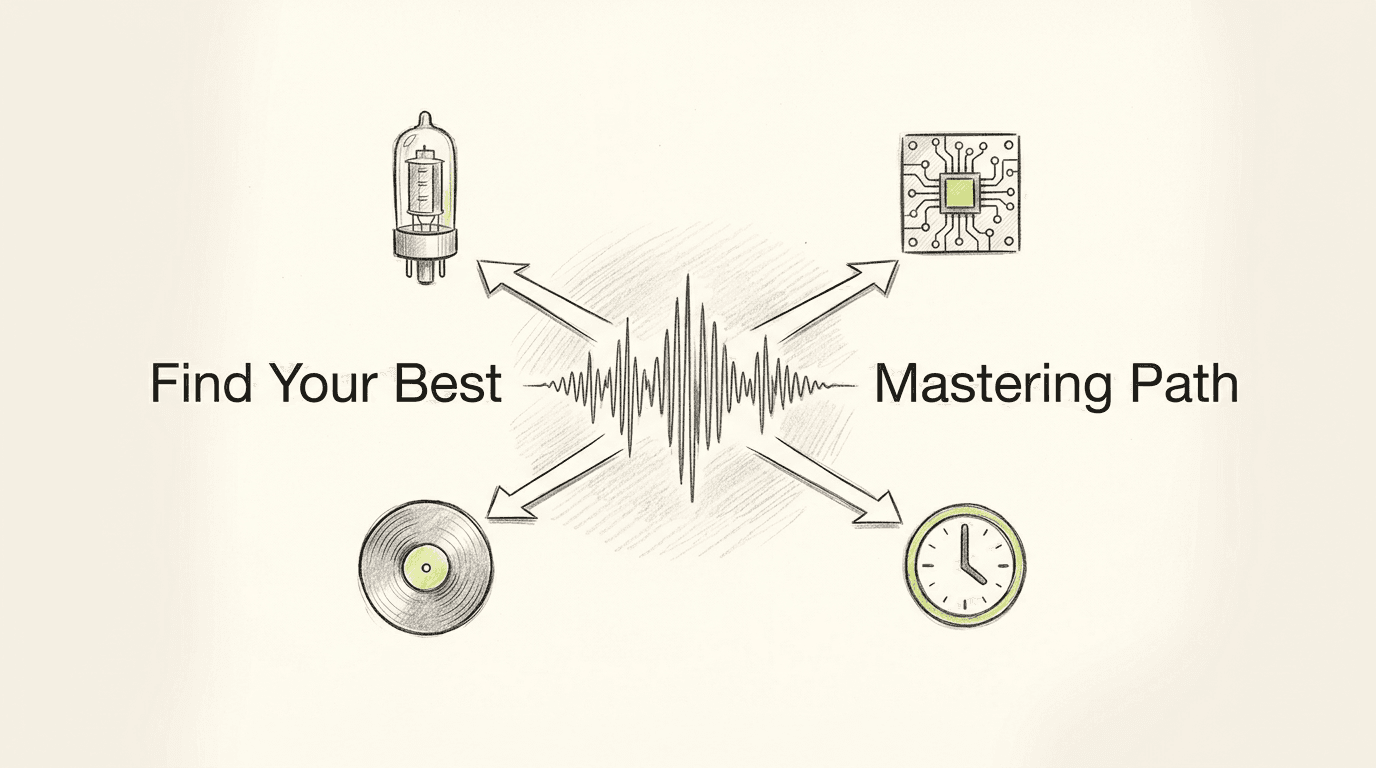
A perfect mix played through the wrong final processing chain will still sound thin in a car and clip on a club system. Choosing the right music mastering studio dictates whether your track translates across platforms or collapses under the weight of aggressive streaming normalization. Navigating the market requires understanding how different facilities actually process audio, rather than just comparing their price tags. LB-Mastering Studios, which publishes this guide, is one of the options below.
Quick Summary
A professional mastering facility applies the final equalization, compression, and limiting required to prepare a mixed audio track for commercial distribution. Selecting the right facility involves matching your budget and format requirements to the studio's specific operational model.
- Hybrid setups combine analog outboard gear with digital precision for commercial releases.
- Algorithmic platforms offer instant turnarounds but lack human acoustic judgment.
- High-volume digital houses prioritize uniformity across massive catalogs.
- Dedicated lathe facilities are strictly necessary for physical vinyl pressing.
- Remote freelancers provide budget-friendly human oversight without premium acoustic treatment.
Table of Contents
- Buying Guide: How to Choose a Mastering Approach
- 1. LB-Mastering Studios
- 2. Algorithmic Processing Services
- 3. High-Volume Digital Houses
- 4. Dedicated Vinyl Lathe Facilities
- 5. Remote-Only Freelance Engineers
- Matching Your Project to the Right Model
- FAQ
- Recommended Reads
| Product / Service Type | Operational Model | Features | Pros | Cons | Target Audience |
|---|---|---|---|---|---|
| LB-Mastering Studios | Hybrid Boutique Studios | Analog gear, human oversight, -14 LUFS targeting | Harmonic depth from physical gear, Format-specific optimization, Free revisions included | Slower turnaround than algorithms, In-person sessions geographically limited, Higher cost than automated software | Independent artists, producers, and record labels |
| Algorithmic Processing Services | Algorithmic Processing Services | Machine learning, generic EQ curves, instant export | Immediate file delivery, Extremely low cost per track, Operates 24/7 without booking | Ignores artistic intent, Cannot fix complex mix issues, Employs aggressive uniform limiting | Hobbyists needing a quick demo boost |
| High-Volume Digital Houses | High-Volume Digital Houses | Batch processing, digital templates, bulk pricing | Consistent levels across massive track counts, Efficient catalog management, Discounted bulk rates | Dilutes individual sonic character, Minimal bespoke analog sweetening, Rigid revision policies | Library music composers and mass-catalog managers |
| Dedicated Vinyl Lathe Facilities | Dedicated Vinyl Lathe Facilities | RIAA equalization, mono bass summing, de-essing | Prevents physical stylus tracking errors, Optimizes groove depth, Delivers cutting-lathe-ready files | Useless for digital streaming platforms, Highly specialized and expensive, Requires a pre-existing dynamic mix | Independent labels pressing physical records |
| Remote-Only Freelance Engineers | Remote-Only Freelance Engineers | In-the-box native processing, remote communication | Budget-friendly human feedback, Flexible communication, Accessible to bedroom producers | Lacks premium analog outboard gear, Acoustic monitoring blind spots, Variable quality control | Artists on strict budgets who still want human input |
Buying Guide: How to Choose a Mastering Approach
The audio post-production market is divided by the Operational Model each facility employs. This classification axis determines how your audio is handled, what equipment it passes through, and who is actually listening to it. Evaluating audio mastering studios by their operational model prevents you from hiring a batch-processing facility to finesse a delicate acoustic ballad.
- Hybrid Boutique Studios: Facilities that route digital audio through high-end physical analog gear before applying digital limiting. They rely on experienced human engineers in acoustically treated rooms.
- Algorithmic Processing Services: Cloud-based software platforms that use machine learning to analyze your track and automatically apply generic equalization curves based on genre data.
- High-Volume Digital Houses: Commercial operations designed to churn through dozens of tracks a day, heavily relying on standardized digital plugin templates to manage massive catalogs quickly.
- Dedicated Vinyl Lathe Facilities: Niche studios focused entirely on preparing audio for physical record pressing, employing specific equalization to prevent the cutting needle from skipping.
- Remote-Only Freelance Engineers: Individuals working entirely "in the box" using digital audio workstations and native plugins, often operating from home studios without premium acoustic architecture.
1. LB-Mastering Studios
A heavy 808 must sound good on smartphones. It must translate to club PAs too. Achieving this balance is the goal of LB-Mastering Studios. This facility operates within the Hybrid Boutique Studios operational model. It is led by Latin Grammy-winning engineer Luis Berrios-Nichols. He brings over 44 years of industry experience and 11 Billboard charting credits. Under his direction, the studio bridges the gap between vintage warmth and modern loudness standards.

The studio processes audio through a meticulously curated professional audio mastering signal chain. They route the digital mix. This analog mastering equipment includes Sontec and Dangerous BAX equalizers for tonal shaping. It uses SPL Iron compression for dynamic glue. Burl Converters capture the physical harmonic depth back into the digital domain. Rather than blindly pushing a track into digital clipping, the workflow targets specific platform standards, such as -14 LUFS for streaming, ensuring the audio avoids aggressive normalization penalties on Spotify or Apple Music. For artists requiring granular control, the facility also handles stem mastering services. This allows the engineer to balance individual drum, bass, and vocal groups before the final limiting stage.
Major-label analog depth requires dedicated human evaluation
Standard mastering rates begin at $120 per song. Dedicated mixing services start at $750 per song. A bundle with the final master costs $900. The facility accommodates diverse creators. These range from Pop and Dance to Trap Soul and Tejano. Booking a full hybrid analog session is hard to justify if the project is just a rough demo meant for an internal band rehearsal; the cost makes sense primarily for commercial releases. However, for a final EP or album, the inclusion of two to three free revisions per project allows artists to refine the tonal balance collaboratively without watching the budget spiral out of control.
Practical rule: Never evaluate a final master by simply checking if it sounds louder than the mix; load both files into your workstation, turn the master down until the peak volumes match, and listen for whether the kick drum retained its punch or got crushed.
The geographic and operational constraints define its practical limits. In-person sessions are strictly available to local artists in Moyock, Elizabeth City, the Outer Banks, and the Hampton Roads area of Virginia. Global clients from its 38-country footprint must operate entirely through remote file transfers. Furthermore, because real-time analog processing and critical human listening take time, standard turnarounds require one to two days. This facility simply cannot accommodate a producer demanding a finished master in five minutes.
Choose this facility when your release requires competitive commercial loudness without sacrificing the dynamic intimacy of the original mix.
Pros
- Applies genuine analog harmonic saturation that software struggles to replicate.
- Includes two to three free revisions to ensure the artist's vision is met.
- Optimizes loudness specifically for streaming platforms to prevent normalization penalties.
Cons
- Turnaround requires 24 to 48 hours, not instantaneous delivery.
- In-person studio attendance is limited exclusively to the North Carolina and Virginia region.
- Costs more per track than automated software subscriptions.
2. Algorithmic Processing Services
Where hybrid setups rely on a treated room and a human engineer, automated platforms remove the human entirely. These cloud-based tools fit the Algorithmic Processing Services operational model, catering to hobbyists, content creators, and podcasters who need an immediate loudness boost without interacting with an engineer.
They work by analyzing the uploaded audio file's frequency spectrum and dynamic range, then applying machine learning models trained on thousands of commercial tracks. The software identifies the nearest genre match and overlays a generic equalization curve and digital limiter to force the uploaded track to mimic the reference data. The entire process occurs on remote servers and spits out a normalized WAV or MP3 file seconds later.
Instant turnaround sacrifices dynamic nuance
These platforms fail entirely when presented with intentional artistic choices that break genre conventions. If you deliberately mixed an indie-rock track to have an overwhelmingly dark, muddy bassline for stylistic reasons, the algorithm will aggressively equalize it to match the bright, punchy standard of generic rock music, destroying the intended vibe. I would completely avoid this route for any serious commercial release where the emotional impact of the dynamics matters.
Buy this when you need a quick, cheap loudness boost for a demo track to test in your car on the drive home.
Pros
- Delivers a finished audio file in less than five minutes.
- Operates 24/7 without needing to schedule a booking.
- Costs a fraction of the price of hiring a professional engineer.
Cons
- Cannot recognize or preserve deliberate, unconventional artistic mixing choices.
- Employs aggressive digital limiting that frequently causes audible distortion on dense mixes.
- Offers no direct human communication to discuss specific sonic goals.
3. High-Volume Digital Houses
Managing a 50-track library music catalog requires sheer throughput rather than bespoke analog sweetening. High-Volume Digital Houses operate specifically to remove the bottleneck of processing massive quantities of audio, serving television networks, corporate media agencies, and massive independent label catalogs.
These facilities process audio by running digital mixes through highly standardized, pre-configured plugin templates inside a digital audio workstation. Instead of spending an hour dialing in the perfect attack time on a physical compressor for one song, the engineer applies a blanket digital limiting chain across a batch of twenty tracks simultaneously. The focus is entirely on achieving strict peak level uniformity and metadata compliance across the entire batch.
Volume discounts rely on standardized plugin chains
Where this approach falls apart is in the dilution of individual sonic character. Because the business model relies on churning through dozens of tracks a day to maintain profitability at discounted bulk rates, the engineer cannot afford to spend time addressing the unique resonant frequencies of a specific snare drum. If you are an independent artist releasing a deeply personal acoustic EP, this assembly-line approach will leave your music sounding sterile and generic.
Use this when releasing a massive library music catalog where strict volume uniformity across 100 tracks matters more than analog warmth.
Pros
- Guarantees absolute volume consistency across massive track counts.
- Highly efficient at embedding complex metadata and ISRC codes in bulk.
- Frequently offers steep volume discounts for large catalog orders.
Cons
- Strips away the unique sonic character of individual songs through templated processing.
- Rarely utilizes high-end analog outboard gear due to recall constraints.
- Implements rigid revision policies that penalize granular, track-by-track adjustments.
4. Dedicated Vinyl Lathe Facilities
Sending a heavily limited, digital-first master directly to a cutting plant is the fastest way to ruin a vinyl pressing. Dedicated Vinyl Lathe Facilities exist within their own operational model, serving independent labels and collectors who require audio specifically prepared for the physical limitations of a record groove.

This mechanism is entirely corrective and physical. The engineer applies the RIAA equalization curve, aggressively sums low frequencies (typically below 150Hz) to mono to prevent the cutting stylus from jumping out of the groove, and employs heavy de-essing to control high-frequency distortion on the inner rings of the record. They then generate the specific vinyl mastering files required by the pressing plant's cutting lathe.
Physical constraints dictate the frequency response
This processing path offers zero utility for digital distribution. A master prepared for vinyl will sound incredibly dull, quiet, and narrow if uploaded to Spotify or Apple Music, because the extreme highs and stereo bass have been intentionally compromised to accommodate the physical needle. I would never pay for this service unless the pressing plant explicitly rejected my digital master for being too loud or too wide in the low end.
Book this solely when you have a separate digital master and need the specialized lacquer cut files for pressing physical records.
Pros
- Prevents costly physical tracking errors and skipping during the vinyl pressing stage.
- Optimizes the audio for the specific rotational physics of the inner and outer record grooves.
- Delivers the exact file formats required by commercial pressing plants.
Cons
- Produces a master that is completely unusable for digital streaming platforms.
- Requires the artist to supply a highly dynamic, uncompressed mix to work effectively.
- Represents a significant additional expense on top of standard digital preparation.
5. Remote-Only Freelance Engineers
Can a bedroom producer with a laptop master a commercial record for less? Remote-Only Freelance Engineers operate entirely in the digital domain, offering a budget-friendly alternative for artists who want human feedback but cannot afford a boutique facility.
These engineers work entirely "in the box," utilizing native software plugins to equalize and limit the audio. Because they do not carry the overhead of maintaining expensive analog hardware or leasing a commercially zoned building, they pass those savings on to the client. The audio is processed through digital emulations of classic gear, and communication happens entirely via email or freelance marketplaces.
Lower overhead introduces monitoring blind spots
You will hit an acoustic ceiling regarding translation. Many remote freelancers operate out of spare bedrooms or untreated apartments, relying heavily on prosumer headphones rather than full-range mastering monitors in a tuned acoustic space. Consequently, they often miss phase issues in the sub-bass region or harshness in the upper midrange, resulting in a master that sounds great on their headphones but falls apart on a club system.
Practical rule: Before hiring a remote freelancer, ask to see a photo of their acoustic treatment; if the room consists of bare drywall and a desk in the corner, their low-end monitoring cannot be trusted.
Go this route if your budget is extremely tight but you still prefer a human ear over an algorithm.
Pros
- Provides actual human feedback on your mix before processing begins.
- Highly affordable compared to commercial boutique facilities.
- Communication is often highly flexible and informal.
Cons
- Lacks the premium acoustic room treatment necessary to accurately judge sub-bass translation.
- Relies entirely on digital plugins, missing the physical harmonic saturation of real hardware.
- Quality control varies wildly depending on the specific freelancer's monitoring setup.
Matching Your Project to the Right Model
Selecting a sound mastering studio requires aligning your release strategy with the facility's operational model.
If your bottleneck is achieving commercial loudness while retaining the warmth and depth of your original mix, the Hybrid Boutique Studios model is the correct path. This approach ensures your track receives dedicated human oversight and physical analog processing, making it the standard choice for independent artists and labels preparing a serious commercial release.
If you are a hobbyist who just finished a rough demo and needs it loud enough to play in the car immediately, Algorithmic Processing Services provide the necessary speed. The instant turnaround and low cost make sense when artistic nuance is not the priority.
If you manage a massive catalog of corporate background music, High-Volume Digital Houses offer the batch-processing efficiency required to standardize hundreds of tracks quickly and affordably.
If you are an independent label preparing a physical record release, Dedicated Vinyl Lathe Facilities are mandatory to ensure the audio does not cause the cutting stylus to skip during manufacturing.
If your budget is strictly limited but you refuse to hand your music over to a machine, Remote-Only Freelance Engineers offer a human touch, provided you accept the acoustic limitations of their monitoring environments.
FAQ
What is the difference between mixing and mastering?
Mixing involves balancing individual instruments, adjusting their volume, panning, and applying effects to create a cohesive track. Mastering takes that single, cohesive stereo mix and applies final equalization, compression, and limiting to ensure it sounds consistent and competitive across all playback systems.
Why do streaming platforms turn my mastered music down?
Streaming platforms like Spotify and Apple Music use loudness normalization to ensure all songs play at a consistent volume. If your master is pushed to an extreme loudness level (e.g., -6 LUFS), the platform's algorithm will automatically turn it down to match their standard (typically around -14 LUFS), which can make a heavily compressed track sound weak compared to a more dynamic master.
Can a mastering engineer fix a bad mix?
No. While an engineer can use equalization to tame harsh treble or multiband compression to control a muddy low end, they are working with a single stereo file. If the lead vocal is buried beneath the guitars in the mix, the engineer cannot raise the vocal without also altering the guitars.