Types of Studio Monitors for Mixing: Evaluating 5 Monitoring Formats
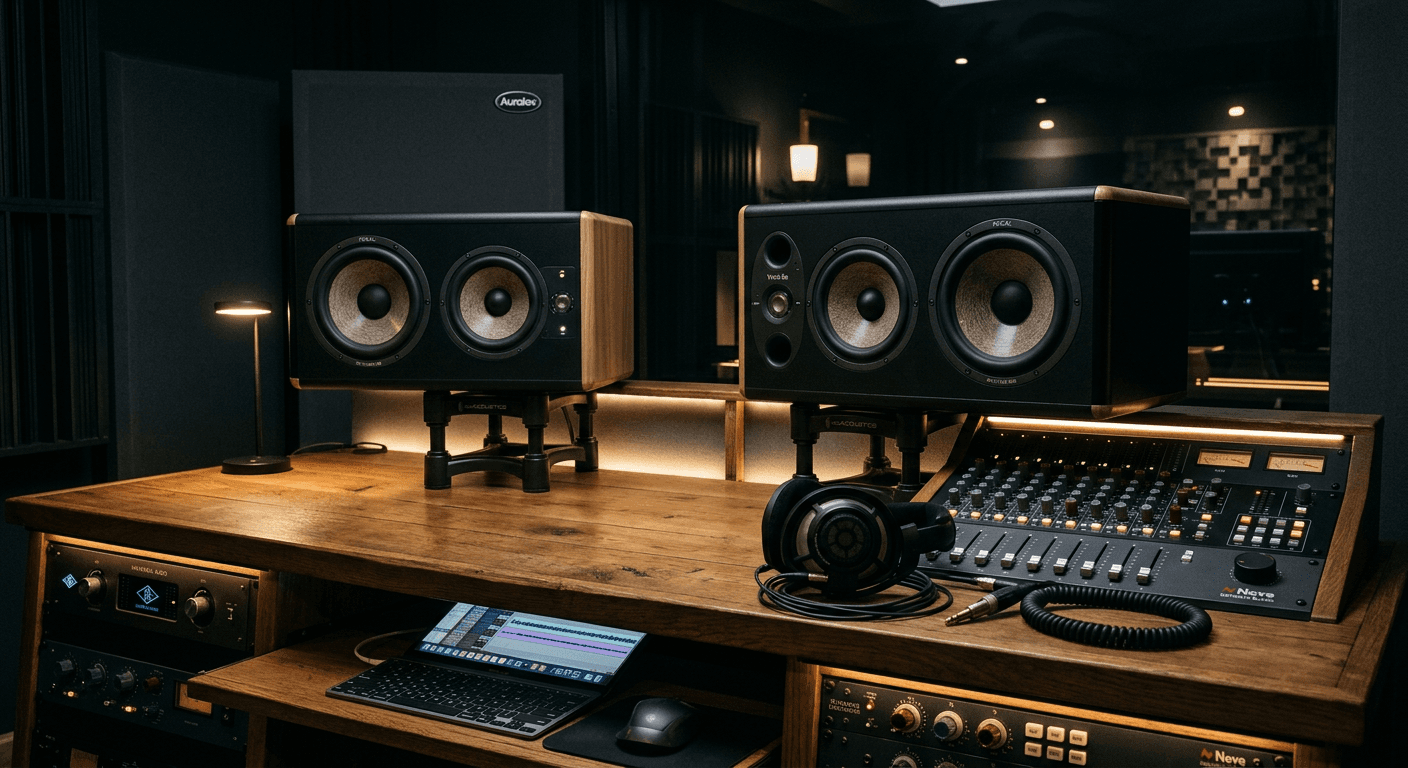
The assumption that a flat frequency response graph printed on a spec sheet guarantees a neutral acoustic environment is the most expensive mistake in critical listening. When a transducer interacts with physical boundaries, the resulting phase cancellations and resonance peaks dictate exactly what you hear at the listening position. Investing heavily in studio monitors for mixing without addressing the air between the drivers and your ears simply amplifies the flaws of the room. We see independent artists and record labels repeatedly upgrade their transducers only to fight the exact same low-frequency build-up they had before, assuming the hardware is at fault rather than the acoustic physics of their workspace.
Quick Summary
Evaluating different monitoring formats involves understanding how transducer size and enclosure design interact with physical room dimensions. Choosing the correct approach dictates whether your final audio translations will sound accurate on commercial playback systems or suffer from severe phase masking.
- Compact nearfield setups bypass room reflections but sacrifice sub-bass extension.
- Midfield three-way designs separate complex midrange frequencies for absolute vocal clarity.
- Passive towers decouple internal amplification to maximize transient headroom.
- Open-back headphones remove room acoustics entirely to provide microscopic detail.
- Closed-back designs trap air to ensure tracking isolation at the expense of stereo width.
Table of Contents
- Why studio monitors for mixing dictate your final master
- How to evaluate the Monitoring Format axis
- 1. Active Nearfield Monitors
- 2. Active Midfield Three-Way Monitors
- 3. Passive Full-Range Towers
- 4. Open-Back Planar Headphones
- 5. Closed-Back Dynamic Headphones
- Matching transducer architectures to your acoustic reality
- FAQ
- Recommended Reads
Why studio monitors for mixing dictate your final master
Every equalization adjustment and compression threshold you set is a direct reaction to what the speakers push into the room. If the physical cabinet is artificially reinforcing frequencies around 120 Hz due to a poorly designed bass port, you will naturally pull that frequency out of the mix. Once that file leaves your studio and plays on a balanced system, the track will sound thin and hollow. This reactionary cycle forces experienced audio engineers to rely on multiple playback systems, triangulating the truth between different transducer designs rather than trusting a single compromised source.
How to evaluate the Monitoring Format axis
To determine which approach suits a specific facility, we classify equipment along the Monitoring Format axis. This lens separates audio mastering monitors based on their physical interaction with the room and their internal amplification strategy.
We divide this axis into five distinct categories: Active Nearfield, Active Midfield Three-Way, Passive Full-Range Tower, Open-Back Planar, and Closed-Back Dynamic. Each format solves a specific acoustic bottleneck. A compact desktop speaker is not a cheaper version of a mastering tower; it is a fundamentally different tool engineered to ignore side-wall reflections. Understanding the operational limits of these categories prevents the expensive mistake of placing massive, air-moving drivers into untreated, resonant spaces.
Practical rule: Never evaluate a new monitoring transducer without listening to a dynamic, uncompressed acoustic reference track that you have known intimately for years; synthesizing your opinion based on unfamiliar audio renders the test useless.
| Transducer System | Monitoring Format | Features | Pros | Cons | Target Audience |
|---|---|---|---|---|---|
| Compact Reference Speakers | Active Nearfield | Bi-amplified, internal crossovers | Minimizes room reflection impact, highly detailed midrange | Severe sub-bass roll-off, narrow soundstage depth | Project studios and independent artists |
| Full-Range Consoles | Active Midfield Three-Way | Dedicated midrange drivers, active DSP alignment | Absolute vocal clarity, extended low-end accuracy | Requires heavy acoustic room treatment | Professional mix engineers |
| Mastering Grade Towers | Passive Full-Range Tower | Decoupled electronics, discrete external amplification | Infinite transient headroom, zero internal digital conversion | Extremely expensive to power, unforgiving placement | High-end mastering facilities |
| Spatial Reference Headsets | Open-Back Planar | Magnetic planar arrays, open acoustic chambers | Microscopic transient speed, bypasses room modes entirely | Lacks physical sub-bass impact, leaks audio | Detail-oriented editors and mixers |
| Isolation Tracking Headsets | Closed-Back Dynamic | Sealed ear cups, traditional voice coils | Blocks environmental noise, prevents microphone bleed | Artificial bass resonance, smeared stereo imaging | Recording musicians and mobile producers |
1. Active Nearfield Monitors
The standard error project studios make when choosing compact reference speakers is expecting them to reveal sub-bass flaws. Occupying the tightest physical footprint, these configurations are built for operators working in untreated or partially treated control rooms where acoustic boundaries sit far too close to the listening position.
Position the drivers three to five feet from the engineer. Direct sound arrives first. It reaches the ear significantly earlier than reflections bouncing off the side walls and ceiling. The internal active crossover network splits the incoming voltage at a predetermined frequency, often around 2.5 kHz. The low band goes to a dedicated amplifier for the woofer. The high band goes to a separate amplifier for the tweeter. This bi-amplified architecture ensures high-frequency transients are not starved of power when a massive kick drum hits the low-end driver at the same time. Because an Active Nearfield avoids relying on the room's chaotic low-frequency response, it should never be compared against large-format installations meant for specialized spatial mastering.
Close proximity limits severe room reflections at the expense of low-frequency extension
We would hesitate to rely solely on this format if the project requires intricate sub-harmonic balancing, as the physical cabinet size simply cannot move enough air below 50 Hz to reveal accurate pitch definition.
The physical constraint of a small woofer housed in a compact cabinet dictates that the lowest octaves will roll off steeply, leaving the engineer guessing about what is happening in the sub-bass region. Mixers who try to compensate by pushing a digital equalizer blindly often end up printing muddy tracks that collapse entirely on club sound systems, forcing them to learn fundamental mastering techniques the hard way.
Opt for this format when your acoustic environment is highly compromised and your primary focus is balancing critical midrange elements like lead vocals and snare drums.
Pros
- Minimizes the destructive impact of untreated room reflections.
- Internal bi-amplification precisely matches driver voltage requirements.
- Small physical footprint fits easily on standard production desks.
Cons
- Cabinet volume severely limits sub-bass reproduction.
- Short listening distances artificially narrow the perceived stereo width.
- Proximity to high-frequency drivers can cause ear fatigue during long sessions.
2. Active Midfield Three-Way Monitors
Where compact two-way designs struggle to separate the heavy bass from the lower midrange, integrating a dedicated mid-frequency driver fundamentally changes the presentation. Full-range active midfields are designed for dedicated commercial spaces and professional mix rooms that have the physical dimensions to support longer acoustic wavelengths.
A three-way active system utilizes an internal digital signal processor or complex analog crossover network to divide the incoming audio into low, mid, and high bands, feeding three distinct internal amplifiers. The dedicated midrange dome or cone takes over the critical 300 Hz to 3 kHz bandwidth. Because the woofer is no longer forced to reproduce complex vocal overtones while simultaneously pushing heavy kick drum fundamentals, intermodulation distortion drops drastically. An Active Midfield Three-Way demands a dedicated, acoustically treated space and should not be compared against compact desktop solutions designed for untreated residential bedrooms.
Dedicated midrange drivers unmask vocal phase issues clearly
We would heavily favor this architecture when preparing stems for specialized vinyl mastering processes, as catching phase anomalies in the upper bass and lower mid frequencies is mandatory before cutting physical grooves.
Implementing these larger cabinets in a room measuring less than 150 square feet creates aggressive low-frequency standing waves, often resulting in massive nulls right at the listening position. If the acoustic boundaries are too close to the rear of the speaker, the low-end energy will wrap around the cabinet and smear the precise imaging the midrange driver works so hard to produce, destroying the phase coherence of the center channel.
Commit to a three-way midfield setup only after investing heavily in broadband acoustic absorption and bass trapping capable of handling the extended low-frequency energy.
Pros
- Separating the midrange reduces complex intermodulation distortion.
- High-wattage internal amplifiers deliver massive volume without clipping.
- Extended frequency response reveals crucial sub-bass interactions.
Cons
- Requires extensive and expensive acoustic room treatment to function properly.
- Heavy cabinet weight demands reinforced, decoupled speaker stands.
- Internal DSP conversions can introduce fractional latency into the signal path.
3. Passive Full-Range Towers
The veteran mastering engineer sitting precisely at the focal point of a deeply treated acoustic room relies on a transducer architecture that separates the electronics from the acoustics. Passive full-range towers serve as the ultimate reference point for critical listening facilities that require absolute transparency without relying on internal active limiters.
Unlike active designs, the amplifiers are not bolted into the vibrating speaker cabinet. A passive tower houses only the drivers and a heavily over-engineered analog crossover network. The audio signal comes from an external, discrete power amplifier. It is matched exactly to the impedance curve of the speaker network. This decoupling prevents the intense magnetic fields and physical vibrations of the massive low-end drivers from degrading sensitive amplification components. A Passive Full-Range Tower depends on discrete external amplification and routing, so comparisons with self-powered monitors containing internal limiters that alter dynamic range miss the point.
Decoupled external amplification guarantees absolute transient headroom
We would strictly avoid this approach for transient-heavy electronic genres if the facility lacks the budget for mastering-grade discrete amplifiers, as underpowering these towers yields sluggish, inaccurate bass responses.
The complexity of matching external amplifiers, custom cabling, and managing impedance loads makes this ecosystem extraordinarily unforgiving and expensive to calibrate. If the discrete amplifier fails to deliver adequate current during massive dynamic swings, the large voice coils will lag behind the audio signal, fundamentally altering the perceived punch of the track and leading the engineer to over-compress the master bus unnecessarily.
Secure this format when constructing a no-compromise critical listening environment where capturing the absolute highest fidelity translates directly to your commercial client deliverables alongside elite hybrid analog and digital mastering equipment.
Pros
- Eliminates internal cabinet vibrations from degrading delicate amplifier circuits.
- Allows engineers to upgrade or swap power amplifiers without changing the speakers.
- Zero internal digital conversion ensures a pure analog signal path.
Cons
- Represents the most expensive path to professional monitoring.
- Matching impedance between the amplifier and the crossover is highly technical.
- Requires massive floor space and exact geometric room placement.
4. Open-Back Planar Headphones
How do you confirm the phase alignment of a transient when the control room walls smear the decay? The primary bottleneck of fighting room modes is entirely bypassed when the transducer is placed directly over the ear. Open-back planar magnetic designs act as the analytical microscope for engineers evaluating headphones mixing mastering applications in environments where speaker volume must remain restricted.
Forget the usual dynamic cone and heavy voice coil. A planar magnetic transducer suspends an ultra-thin diaphragm, printed with a conductive circuit, between two arrays of powerful magnets. Current passes through the circuit. The entire surface of the diaphragm moves simultaneously. Because the ear cups are entirely open to the surrounding air, there is no enclosed acoustic chamber to create resonant bass build-up or cup reverberation. The result is incredibly fast and accurate transient representation. Because an Open-Back Planar works without any physical room interaction, it should not be compared against sealed tracking headphones meant for isolation.
Uniform diaphragm movement eliminates traditional voice coil distortion
We would hesitate to use this format as the sole reference when determining the final low-end energy of a club track, as the physical sensation of sub-bass impact hitting the chest cavity is entirely absent.
The lack of acoustic isolation means that environmental noise bleeds directly into the critical listening experience, rendering them useless in tracking rooms or noisy apartments. Furthermore, because both ears are completely isolated from each other, the natural crossfeed that occurs when listening to speakers in a room does not happen, leading to an exaggerated perception of stereo width that can trick you into panning elements too narrowly.
Integrate this transducer style into your workflow to double-check reverb tails, identify minute digital clicks, and confirm granular transient details late in the production process.
Pros
- Magnetic arrays deliver transient speed that traditional dynamic drivers cannot match.
- Open-air design entirely eliminates internal cup resonance.
- Highly analytical frequency response exposes microscopic digital errors.
Cons
- Leaks audio loudly into the surrounding environment.
- Requires a dedicated, high-voltage headphone amplifier to drive the planar magnets.
- Fails to recreate the physical sensation of low frequencies moving through a room.
5. Closed-Back Dynamic Headphones
When a producer is forced to work in transit or track vocals in the same room as the recording rig, the immediate requirement becomes acoustic isolation. Closed-back dynamic headphones represent the standard utilitarian tool for keeping click tracks out of the microphone and external noise out of the ears.
A traditional dynamic driver utilizes a domed diaphragm attached to a wire coil suspended in a stationary magnetic gap. When an amplified signal reaches the coil, it rapidly pushes and pulls the dome to displace air. The sealed outer shell traps that displaced air, preventing sound from escaping into the environment while simultaneously blocking ambient room noise from reaching the ear canal. This trapped air mass acts as an acoustic suspension system that forcefully reinforces low-frequency output. A Closed-Back Dynamic traps air to prevent microphone bleed, meaning it should not be compared against reference-grade spatial monitoring tools.
Sealed ear cups artificially boost sub-frequency resonance
We would actively advise against relying on these for final mastering equalization decisions, as the trapped pressure chambers inevitably mask delicate midrange details and distort the perceived depth of field.
The physical enclosure creates internal reflections that bounce off the hard plastic shell and back into the ear, introducing phase smear and comb filtering that simply does not exist in the source file. This acoustic masking forces the mixer into a cramped stereo field where panning decisions feel drastically narrowed, often resulting in mixes that sound excessively wide and disconnected when finally played on mastering studio speakers.
Rely on this isolation tool strictly for tracking musicians, editing podcasts in public spaces, and verifying how a dense mix will translate to consumer playback devices.
Pros
- Provides critical isolation necessary for recording live microphones.
- Robust dynamic drivers are highly durable for mobile travel.
- Affordable entry point for basic audio editing tasks.
Cons
- Trapped acoustic pressure creates artificial bass resonance.
- Internal cup reflections smear crucial phase and depth information.
- Sealed design causes physical heat and ear fatigue over short periods.
Matching transducer architectures to your acoustic reality
Selecting the correct hardware requires an honest assessment of your listening environment rather than your budget.
If you are operating in a standard residential bedroom with minimal acoustic absorption, the Active Nearfield format prevents you from fighting massive standing waves. Attempting to force heavy low-end energy into a small space always results in a muddy, inaccurate master.
For professional facilities equipped with deep bass trapping and dedicated quadratic diffusors, the Active Midfield Three-Way offers the necessary midrange clarity to execute complex stem mastering workflows confidently.
When constructing a purpose-built mastering facility where zero digital conversion can be tolerated in the monitoring path, the Passive Full-Range Tower remains the ultimate authority on transient truth.
If your workflow demands analytical transient inspection without any spatial coloration, an Open-Back Planar system acts as a flawless secondary reference point, allowing you to bypass the room entirely.
Finally, when capturing live vocal takes or working entirely in transit, a Closed-Back Dynamic provides the essential acoustic isolation required to prevent microphone bleed and block environmental distractions.
Practical rule: The physical dimensions of your listening room dictate the maximum size of your low-frequency drivers; pushing massive acoustic wavelengths into a tiny space always destroys frequency accuracy.
FAQ
Can you master audio on closed-back headphones? While closed-back headphones provide necessary acoustic isolation for tracking, the sealed ear cups trap air pressure and distort the low-frequency phase response. You can check elements on them, but relying on them for final equalization decisions usually results in translated mixes that lack depth and space.
Why do professional studios use passive mastering towers? Passive architectures decouple the delicate amplification electronics from the extreme physical vibrations generated by massive low-frequency drivers. This separation requires expensive external amplifiers but guarantees maximum transient headroom and zero internal digital conversion.
Do active nearfield speakers need room treatment? Yes. Although their close physical proximity to the listening position minimizes the delay between direct and reflected sound, untreated side walls and ceilings will still create aggressive comb filtering in the critical midrange frequencies, severely masking vocal clarity.